How Does an Induction Oven Work Step by Step
An induction oven works by generating an electromagnetic field beneath its surface that heats compatible cookware directly. This process makes induction cooking fast, energy-efficient, and precise.
You just place a ferromagnetic pot or pan on the cooktop, which activates the magnet and starts heating quickly and efficiently.
You can adjust the heat settings precisely for better control, allowing for consistent cooking results.
Safety features like automatic shut-off and cool surfaces protect you from burns, making it safer than traditional ovens. Turn it off with the power button when done.
Keep exploring to uncover more tips about using induction ovens effectively. Understanding these steps will help you maximize your cooking experience and maintain your induction oven properly.
Key Takeaways
- A copper coil beneath the cooktop generates an electromagnetic field when powered on.
- The magnetic field induces eddy currents in compatible ferromagnetic cookware placed on the surface.
- Only cookware with a magnetic base heats up, while the cooktop surface remains cool.
- The oven provides rapid heating and precise temperature control by adjusting the electromagnetic energy.
- Heat is automatically shut off if cookware is removed, ensuring safety and energy efficiency.
Understanding Induction Cooking Technology
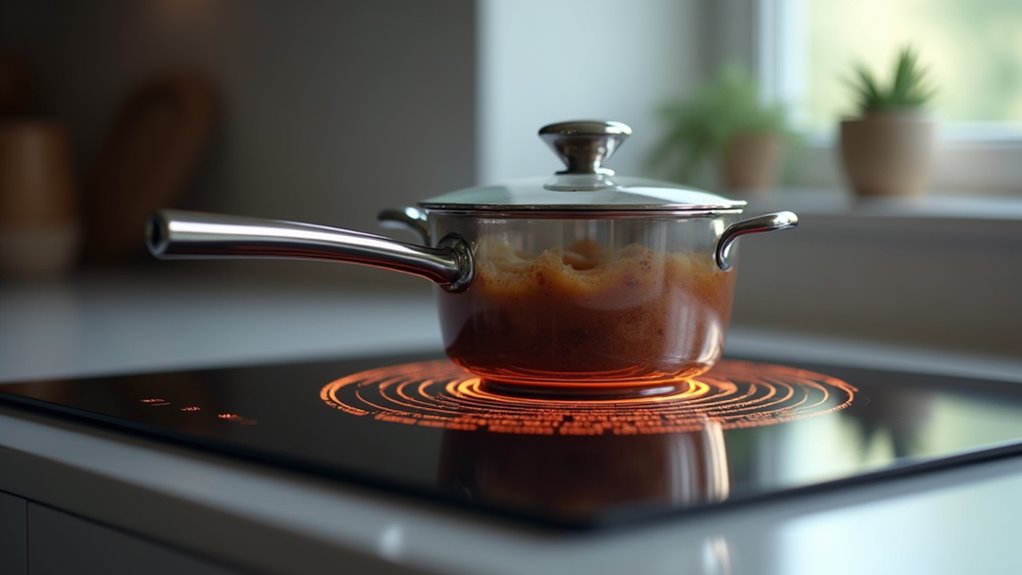
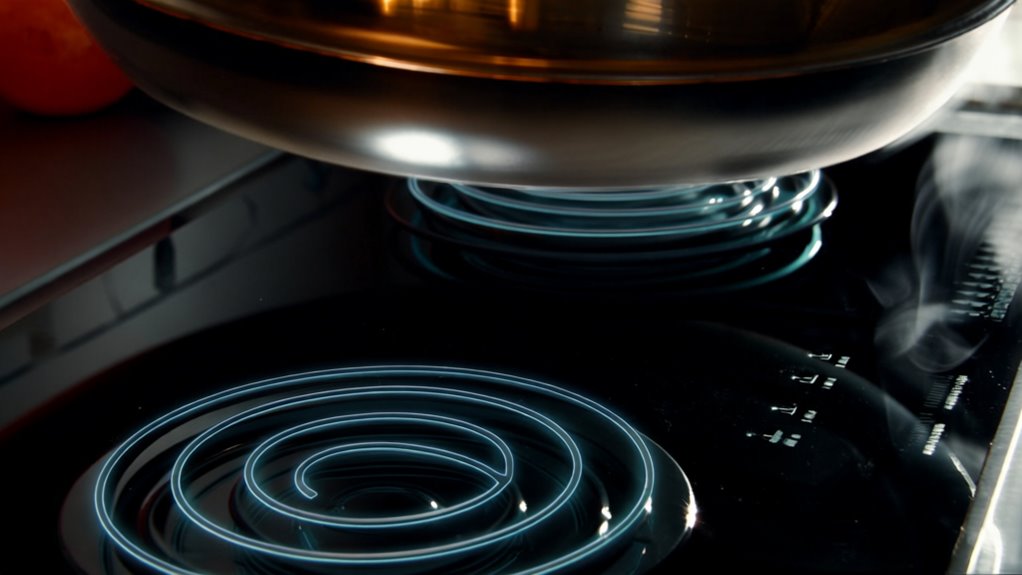
Anyone who’s used an induction cooktop knows it heats differently than traditional stoves. Induction cooking uses electromagnetic energy to heat your cookware directly, making the cookware itself the heat source instead of relying on heating elements. Beneath the cooktop, a copper coil generates a magnetic field that induces eddy currents in ferromagnetic materials like cast iron or certain stainless steels.
This means only compatible cookware will heat effectively, so you can test if your cookware is compatible with a magnet. Because the heat is generated in the cookware, the cooktop surface stays cool, enhancing safety. Plus, induction cooktops boast about 90% energy efficiency—far better than electric or gas stoves—resulting in less wasted heat and a cooler kitchen environment.
Activating the Induction Oven
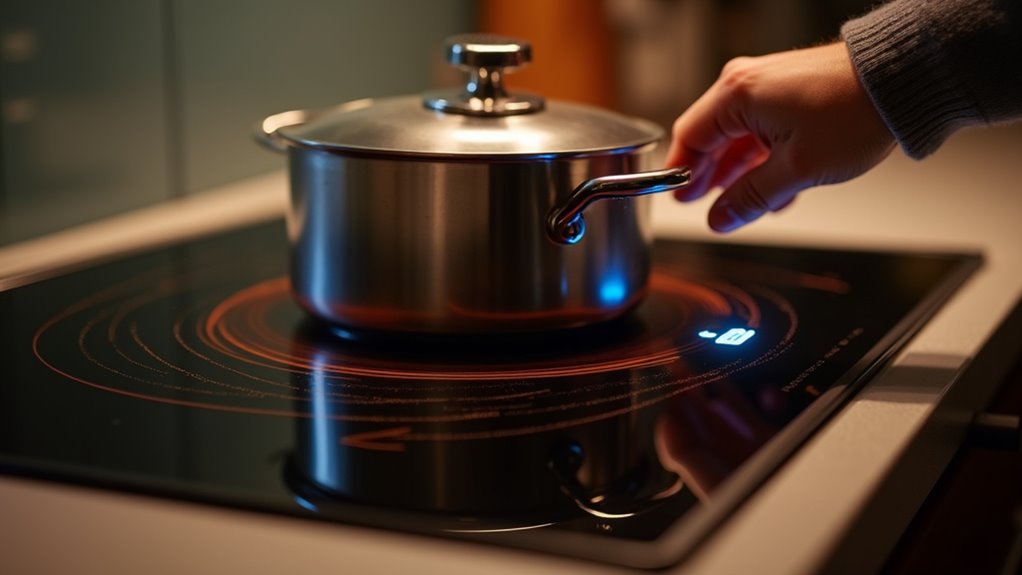
Before you power up the induction oven, make certain your cookware is compatible by testing if a magnet sticks to its base. Once confirmed, pressing the power button activates the electromagnet beneath the cooking surface.
This setup guarantees the oven only heats when suitable cookware is detected.
Powering the Electromagnet
The key to powering an induction oven lies in energizing a coil of copper wire beneath the cooking surface. When you turn on the oven, electricity flows through this copper wire, creating a strong electromagnetic field. This field interacts with compatible cookware placed on the heating element, inducing eddy currents that generate heat directly within the pan.
Because the cookware itself becomes the heat source, induction provides rapid and efficient cooking. You’ll notice the oven offers responsive temperature controls, letting you adjust heat instantly for precise cooking results. Without compatible cookware, the electromagnetic field won’t generate heat, ensuring safety and energy efficiency.
Powering the copper wire coil effectively activates the induction process, turning electrical energy into a focused and controllable heat source for your kitchen needs.
Detecting Compatible Cookware
A key step in using an induction oven is verifying your cookware is compatible. Induction heating only works with cookware made from ferromagnetic materials, like cast iron or certain stainless steels. The oven detects compatible cookware through a magnetic field generated beneath the cooktop surface.
If the cookware isn’t suited for induction cooking, the oven won’t activate, preserving safety and energy efficiency.
To check if your cookware is induction-ready, try the magnet test:
- If a magnet sticks firmly to the bottom, it’s compatible cookware.
- Cookware made from non-ferromagnetic materials won’t trigger induction heating.
- Some induction ovens alert you when cookware isn’t suitable, preventing wasted cooktop heat.
This detection process verifies your induction oven operates efficiently and safely every time.
Choosing Compatible Cookware
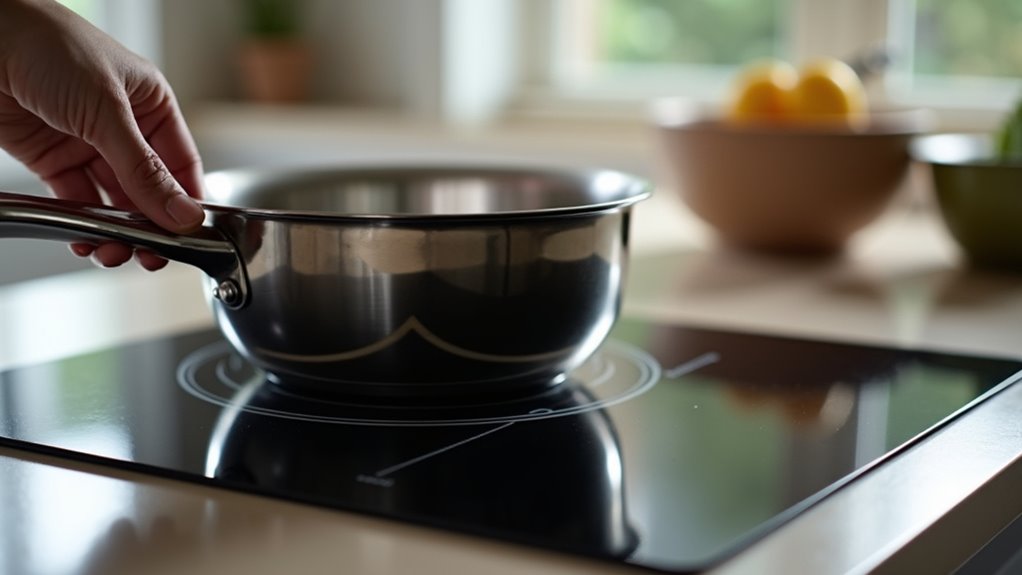
When selecting cookware for your induction oven, you’ll need to focus on materials that respond to magnetic fields, like cast iron or certain stainless steels. Induction cooktops work by generating a magnetic field that heats cookware made from ferromagnetic materials. To verify your cookware is compatible with induction, use a magnet stick — if it clings to the base, you’re good to go.
Make sure the cookware has a flat bottom; this guarantees ideal contact with the cooktop surface, promoting even heating. Avoid using aluminum, copper, or glass cookware unless they have a magnetic base, as they won’t heat properly. Many brands now label their cookware as induction-compatible, simplifying your choice.
Prioritize cast iron or stainless steel cookware to get the best performance from your induction oven.
Placing Cookware on the Induction Surface
Before you start cooking, make certain your cookware is compatible by checking if a magnet sticks to its bottom.
Place the pan flat and centered on the induction surface to guarantee even heating. Proper placement helps the cooktop detect the pan and heat it efficiently.
Cookware Compatibility Check
Although induction cooking offers fast and efficient heating, you’ll need compatible cookware to make it work properly. To check cookware compatibility, try using a magnet on the bottom of your pot or pan—if it sticks, your cookware likely contains ferrous materials like cast iron or certain stainless steel types, making it suitable for induction cooking.
Cookware must also have flat bottoms to guarantee efficient heating and proper contact with the induction surface.
Keep these in mind for safe cooking and peak performance:
- Use cookware with ferrous materials confirmed by the magnet test
- Verify the diameter matches the induction heating element size
- Follow the cookware manufacturer’s guidelines for induction compatibility
This careful check helps you avoid non-magnetic materials and guarantees efficient, safe cooking.
Proper Pan Placement
Proper pan placement is key to getting the most out of your induction cooktop. You need cookware with a flat bottom made of ferromagnetic materials for efficient energy transfer. Always center your pan on the heating element and make certain its base diameter matches the element size.
This maximizes cooking efficiency and prevents the cooktop from shutting off.
| Tip | Explanation |
|---|---|
| Flat Bottom | Guarantees even contact with cooktop |
| Match Pan & Element | Prevents uneven heating |
| Center Pan | Maximizes energy transfer |
| Magnet Test | Confirms compatible cookware |
Following these steps assures proper pan placement and ideal performance on your induction cooktop.
Selecting the Cooking Zone
How do you select the right cooking zone on an induction cooktop? First, make certain your cooktop is powered on and the cooking surface is clean. Place your induction-compatible cookware squarely on the cooking zone; the base must align with the heating element.
Next, use the control panel—whether buttons or touchscreen—to select the desired zone. The cooktop automatically sets the right heating element, heating the cookware efficiently and evenly, which is more efficient than gas.
Remember these tips:
Choose compatible cookware, use intuitive controls, and avoid overlapping zones for safe, even heating every time
- Choose select models with intuitive zone controls for ease.
- Always confirm cookware compatibility to activate the zone properly.
- Avoid overlapping zones to maintain even heating and safety.
This guarantees you can efficiently adjust the heat setting for perfect cooking every time.
Adjusting Heat Settings Precisely
When you adjust heat settings on an induction oven, you’ll notice how quickly and precisely it responds to your input. Induction heats the cookware directly, minimizing heat loss and enabling rapid heating. This means your temperature control is more energy efficient and accurate, perfect for precise cooking.
You can switch from high power to low heat instantly, making heat adjustments seamless and effective.
| Feature | Benefit | Impact |
|---|---|---|
| Rapid heating | Quick response | Saves time |
| Precise temperature control | Fine increments | Ideal for delicate dishes |
| Energy efficient | Less heat loss | Lower energy use |
| Direct cookware heating | Even heat distribution | Consistent results |
This precise control lets you cook confidently every time.
Monitoring Cooking Progress
Although you can quickly adjust heat settings on an induction oven, monitoring your cooking progress is just as easy and precise. The precise temperature control of electric induction cooktops lets you track the cooking process closely, guaranteeing even heat distribution and preventing overcooking.
Since the cooking surface stays cool, you can safely check your pots and pans without risk of burns. Using induction cookware with transparent lids or compatible monitoring tools enhances visibility, so you don’t have to lift lids and lose heat.
The cool surface lets you safely check your food without lifting lids or risking burns.
Key tips for monitoring cooking progress on induction cooktops:
- Use cookware designed for induction to guarantee accurate heat response.
- Take advantage of steady simmer or rapid boil settings for consistent results.
- Monitor visually through transparent lids to maintain precise temperature control.
Safety Features of Induction Ovens
Safety is a key advantage of induction ovens, designed to protect you and your home at every step. Their heating technology detects cookware presence, activating heat only when compatible pans sit on the cooking surface. This prevents burns since the surface stays cool around the cookware, reducing risks from spills or accidental touches.
Automatic shut-off kicks in if a pot boils dry or is removed, stopping overheating instantly. Plus, child-lock features keep little ones from turning the oven on by mistake, adding another layer of safety.
| Safety Feature | Description |
|---|---|
| Cookware Detection | Activates heat only with proper cookware |
| Cool Cooking Surface | Prevents burns by staying cool around pans |
| Automatic Shut-Off | Stops heat if pot is removed or dry |
| Child-Lock | Prevents unintended activation |
| Spill Safety | Flat surface reduces fire risk from spills |
Turning Off the Induction Oven
Before you unplug or shut down your induction oven completely, make certain all cooking zones are turned off by pressing the power button on the control panel. When the oven turns off, the indicator light usually confirms the shutdown. Check the hot surface indicator to see if the cooktop is still too hot to touch.
Always turn off all cooking zones before unplugging and check the hot surface indicator for safety.
For your safety, never clean the surface while it’s hot to avoid burns or damage. Always turn off the induction oven when not in use to prevent potential hazards and save energy.
- Press the power button to turn off all cooking zones simultaneously.
- Wait for the indicator light to go off before cleaning.
- Confirm the hot surface indicator is off to ensure safe handling.
Frequently Asked Questions
How Does the Induction Oven Work?
An induction oven heats your cookware directly using electromagnetic energy. When you place compatible pots or pans on the cooktop, a magnetic field generates eddy currents inside the metal, creating heat right where it’s needed. This means your food cooks faster and more efficiently.
Plus, the surface stays cool, so you’re less likely to burn yourself, and cleanup is easier since spills don’t burn onto the cooktop.
What Is the Downside of Induction Stoves?
The downside of induction stoves is that you might need to replace your existing cookware if it’s not induction-compatible, which can be pricey. You’ll also notice a learning curve since induction heats up faster, requiring you to adjust your cooking habits. Some users find the slight humming noise annoying, and the upfront cost of the stove itself can be higher than traditional options.
These factors might make the switch a bit challenging.
Do You Need Special Baking Pans for an Induction Oven?
Back in the days of knights and castles, you’d need special armor to face a dragon—just like you need special baking pans for an induction oven. You’ll want cookware made from ferromagnetic materials like cast iron or certain stainless steel, with flat bottoms to work properly. Non-magnetic pans won’t heat up unless you use an induction interface disc.
Checking your oven’s guidelines helps you pick the right pans for faster, efficient baking.
How to Use an Induction Stove for Beginners?
To use an induction stove, first make sure your cookware is induction-compatible—just check if a magnet sticks to the bottom. Turn on the stove, place your pan on the heating zone, and select the desired heat level.
You’ll notice it heats up fast, so adjust the temperature carefully. Keep an eye on your food because it responds instantly to changes. When you’re done, turn it off and wait for the surface to cool before cleaning.
Conclusion
Now that you know how an induction oven works step by step, you’re ready to make the most of this efficient cooking method. Just remember, using the right cookware and adjusting heat settings carefully will guarantee your meals turn out perfectly every time.
With safety features keeping you covered, cooking becomes a breeze rather than a chore. When it comes to induction cooking, you’re truly holding all the cards in your kitchen.
Mastering how an induction oven works allows you to enjoy faster heating, energy efficiency, and precise temperature control. Embrace this innovative technology and elevate your cooking experience today.