How You Can Safely Put Pots on a Grill
You can safely put pots on a grill by first ensuring your grill can handle the pot’s weight and using sturdy, heat-resistant cookware like cast iron. Knowing how you can safely put pots on a grill is essential for successful outdoor cooking.
Start with a clean grill and preheat gradually to avoid thermal shock.
Place pots steadily on flat grates or use a trivet for balance to keep everything stable. Keep the grill temperature below 650°F to protect your pot and grill.
With careful heat management and stability, your outdoor cooking will go smoothly.
There’s plenty more tips to help you master this technique and enjoy delicious grilled meals using your pots. Always monitor your setup for safety and success.
This approach ensures your pots and grill stay in great shape for many cookouts to come.
Key Takeaways
- Verify your grill’s weight capacity and use specialized grates or trivets to support heavy pots safely.
- Use durable, heat-resistant cookware like cast iron with a flat base for stability and even heat distribution.
- Gradually preheat cold pots on the grill starting at medium-low heat to prevent thermal shock and warping.
- Monitor grill temperature closely, keeping it below 650°F to protect pots and ensure even cooking.
- Secure pots to prevent slipping and cool them completely before cleaning to avoid damage and maintain seasoning.
Understanding Grill Compatibility With Pots
Before you put a pot on your grill, you’ll want to make sure your grill can safely support it. Not all grills are built to handle the weight of pots, especially smaller models with limited weight-bearing capacities. If you’re thinking of using a dutch oven, it’s important to check the manufacturer’s guidelines first.
Directly placing a dutch oven or any pot on grill grates might cause uneven heat transfer since grills are designed primarily for open-flame cooking, not pot use. Larger pots can also create instability, leading to uneven cooking or even accidents. High heat retention in pots like dutch ovens can damage grill components—there have been reports of grills melting under extreme conditions.
To avoid these issues, consider using specialized grill grates made for pots; they help distribute weight evenly and protect your grill. This way, you can cook safely and efficiently without risking your equipment.
Choosing the Right Cookware for Grilling
When picking cookware for your grill, you’ll want to focus on materials that can handle high heat without warping, like cast iron or Dutch ovens. Make sure the size fits well on your grill and has a flat base to keep it stable while cooking.
Avoid non-stick options since their coatings can break down under intense heat.
Material Compatibility
Choosing the right cookware for grilling is essential to guarantee safety and good cooking results. When it comes to material compatibility, you want pots that can handle high heat without warping or releasing harmful chemicals. Enameled cast iron Dutch ovens are a great choice because they withstand intense grill temperatures and distribute heat evenly.
Stainless steel pots also work well due to their durability and heat resistance. Avoid non-stick pots since their coatings can degrade, releasing toxins and shortening cookware life. Make sure your pot has a flat bottom to maintain good contact with the grill grates, promoting even cooking.
Always check the manufacturer’s guidelines to confirm your cookware is grill-safe, ensuring safe, effective cooking every time.
Size and Stability
After picking cookware that can handle the grill’s heat, you’ll want to take into account the size and stability of your pots and pans. Smaller grills have limited weight capacity, so using heavy or oversized cookware can make them unstable, risking spills and accidents. Make sure your pots distribute weight evenly to keep them steady, especially when aiming to capture that rich smoky flavor.
Also, check that your cookware fits well with your grill’s design to avoid scratching the surface. Since many smaller grills are meant for lighter tasks, heavier pots might exceed their limits. It’s a smart idea to test your cookware on the grill at home first to spot any balance issues before cooking outdoors.
This way, you’ll enjoy safe, flavorful grilling every time.
Preparing Your Grill for Pot Use
To prepare your grill for pot use, start by making sure it’s clean and free of debris to avoid contaminating your food. Whether you’re using a Gas Grill or another type, a clean surface prevents unwanted residues from affecting your pot’s contents. Next, check your grill’s weight capacity—smaller Gas Grills might not support heavy pots safely, so verify this before you begin.
Consider using a griddle or a grill grate designed specifically for pots; these accessories improve heat transfer and protect your grill’s surface from scratches or damage. Preheat your grill gradually to establish a consistent cooking environment without causing thermal shock to the pot or grill. Finally, always monitor the temperature, keeping it below 1200°F.
This helps prevent overheating and makes sure both your grill and cookware stay in good condition while you cook. Following these steps will set you up for safe and effective pot cooking on your Gas Grill.
Gradually Heating Pots to Prevent Damage
When you place cold pots directly on a hot grill, the sudden temperature change can cause thermal shock, leading to cracks or warping. To prevent this, always let your pots reach room temperature for at least 10 minutes before placing them on the grill. Start by putting the cold pot on the grill grates before turning on the burners, allowing it to warm gradually.
Begin heating at medium-low for 3 to 5 minutes, then slowly increase the temperature. Use a thermometer to check the pot’s temperature and make certain it stays within safe limits to avoid damage. Also, never add cold liquids to a hot pot, as this sudden change can cause warping or cracking.
Managing Heat Levels for Safe Cooking
To keep your pot safe on the grill, you’ll need to regulate the temperature carefully and avoid sudden changes that cause thermal shock. Make sure to preheat the grill gradually and keep the heat below 650°F to protect your pot’s material.
Using a surface thermometer can help you monitor and maintain a steady, safe cooking temperature.
Regulate Grill Temperature
A key step in safely putting pots on a grill is regulating the temperature carefully. To protect your cookware and cook effectively, you should regulate grill temperature by keeping it below 650 ºF, ideally around 500 ºF. Using a surface thermometer helps you monitor the heat accurately.
Adjust the burners as needed to maintain consistent temperatures and avoid hot spots that might cause uneven cooking or damage your pots. Remember, pots heat more slowly on a grill than on a stove, so keep an eye on cooking times to guarantee your meal turns out perfectly.
Avoid Thermal Shock
Keeping grill temperatures steady is important, but you also need to manage heat changes carefully to avoid thermal shock. When using cast-iron cookware, start by placing cold pots on the grill grates before turning on the burners. This guarantees even heating and reduces the risk of warping.
If your cast-iron has been stored in a cold place, let it reach room temperature for at least 10 minutes before heating. Begin warming your cast-iron on medium-low heat for 3 to 5 minutes, then gradually increase the temperature. Use a probe thermometer with an infrared sensor to monitor the pot’s temperature, avoiding sudden spikes.
Also, keep the cooking temperature below 1200°F to prevent cracking or warping from extreme thermal stress.
Avoiding Thermal Shock When Using Cast Iron
When you’re using cast iron on the grill, warming it gradually is key to preventing thermal shock. Start by placing your cold cast iron pot on the grill grates before turning on the burners. This allows the cookware to heat evenly and reduces sudden temperature changes that could cause cracking.
Preheat the cast iron on medium-low heat for 3 to 5 minutes before increasing the temperature, giving it time to adjust safely. Always let your cast iron reach room temperature for at least 10 minutes before exposing it to high heat. Avoid pouring cold water into a hot cast iron pot, as this shock can lead to warping or cracking.
To keep a close eye on your cookware’s temperature, use a probe thermometer with an infrared sensor. This helps guarantee you don’t exceed safe heat limits, preserving your cast iron’s integrity for many grilling sessions to come.
Techniques for Stable Pot Placement on Grates
After warming your cast iron gradually to prevent thermal shock, you’ll want to focus on how you place your pots on the grill grates. First, make sure your grill grates are level and stable to avoid tipping and spillage during grilling. If possible, use grill grates designed specifically for pots and pans—they provide better stability and protect your grill’s surface.
When placing multiple pots, distribute their weight evenly: put larger pots in the center and smaller ones near the edges. This balance helps keep everything steady. Also, keep your grill’s weight capacity in mind; overloading smaller grills can cause instability.
For extra security, consider using a trivet or heat-resistant mat under your pots. These add support and reduce the risk of pots slipping or scratching the grates. By following these techniques, you’ll enjoy safer, more efficient grilling without worrying about accidents or damage.
Recommended Cleaning and Maintenance Practices
Since maintaining your pots properly guarantees they last longer and perform better on the grill, you’ll want to handle cleaning and storage with care. Taking time during cleaning time confirms you preserve your pots’ quality and non-stick properties. Always let your pots cool completely before washing to avoid thermal shock.
When cleaning, scrape off any food residue and rinse with warm water—skip soap unless absolutely necessary to protect seasoning. After washing, dry pots thoroughly to prevent rust and moisture buildup.
Keep these tips in mind for effective maintenance:
- Cool pots completely before cleaning.
- Use warm water and avoid soap when possible.
- Thoroughly dry pots after washing.
- Store pots indoors and separate stacked cookware with a towel.
- Regularly inspect for wear or damage.
Following these practices during cleaning time helps your pots stay in top shape, confirming safe and efficient use on your grill every time.
Common Risks and How to Prevent Them
Although grilling with pots can expand your cooking options, you need to be aware of certain risks like overheating, instability, and thermal shock. High heat can warp or melt grill parts, so never let temperatures exceed 1200°F. If you’re using a smaller grill, check its weight limit before placing heavy pots on it to avoid tipping or damage.
Stability is key, especially with larger cookware. Thermal shock is a common problem, especially with cast iron. To prevent cracking, bring cold pots to room temperature before placing them on a hot grill.
Using durable materials like cast iron or stainless steel pots helps withstand intense heat and reduce damage risk. Also, consider grill grates designed for pots, which improve heat transfer and cooking efficiency. By keeping these precautions in mind, you’ll safely enjoy grilling with pots without risking your equipment or meals.
Alternative Cooking Methods for Outdoor Meals
How can you expand your outdoor cooking options beyond placing pots directly on the grill? Exploring alternative methods can make your outdoor meals safer and more versatile. A portable propane burner is a great tool, offering precise heat control and the ability to cook larger meals without risking grill damage.
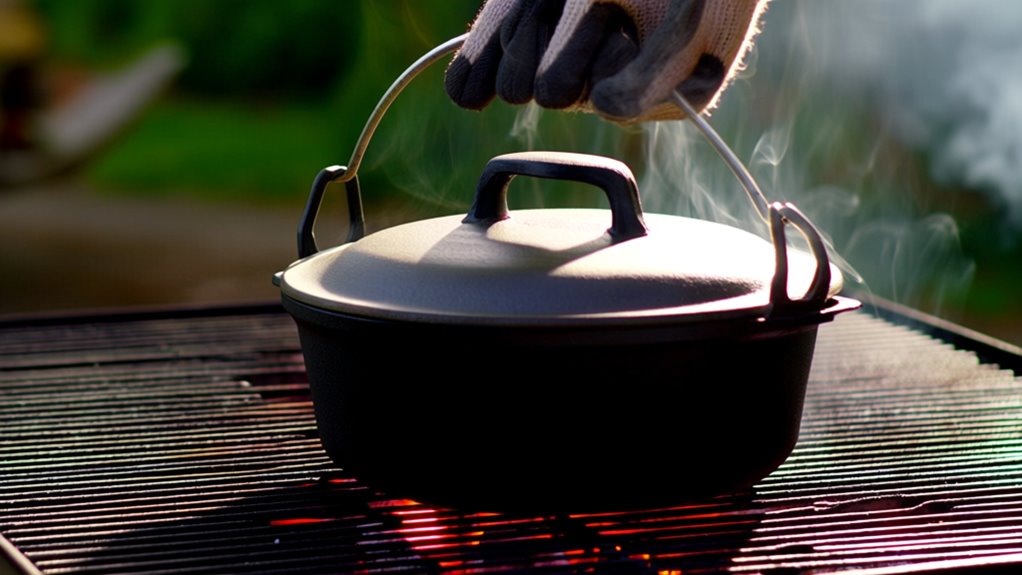
You might also try a cast iron Dutch oven on your grill for even heat distribution, perfect for stews and bread baking. Specialized grilling grates and adjustable grill racks help support different cookware sizes while protecting your grill’s surface. Using a griddle on the grill is another option, just be sure to preheat it gradually to avoid thermal shock.
Cast iron Dutch ovens, specialized grates, and griddles enhance grill cooking while protecting your equipment.
Here are some alternative cooking methods to evaluate:
- Use a portable propane burner for reliable, independent heat.
- Cook with a cast iron Dutch oven for versatile dishes.
- Employ grilling grates designed for pots and pans.
- Preheat a griddle slowly on the grill.
- Utilize adjustable grill racks for stability and weight support.
Frequently Asked Questions
Can You Put Pots on a Grill?
Yes, you can put pots on a grill, but you’ll want to be careful. Not all pots are suited for direct heat, and placing them straight on the grill can damage both your pot and the grill surface.
To avoid issues, use special grill grates made for pots or test your setup at home first. Keep an eye on heat levels to prevent melting or warping, especially with smaller grills.
What Pans Are Safe to Use on a Grill?
You might worry about your pans warping or melting on the grill, but stainless steel and cast iron pans handle the heat like champs. You’ll want to avoid non-stick pans since their coatings can get damaged and release harmful chemicals.
Heavy-duty cookware like Dutch ovens is perfect—they distribute heat evenly and stay sturdy. Just make sure your pans have flat bottoms for stability, and always check the manufacturer’s guidelines before grilling.
Can I Fire Pottery in My Grill?
You really shouldn’t try to fire pottery in your grill. Grills don’t reach the high, consistent temperatures pottery needs, and uneven heat can cause your pieces to crack or break.
Plus, it’s unsafe—there’s risk of flare-ups and damage to your grill. If you want to fire pottery properly, it’s best to use a kiln designed for that purpose.
That way, your pottery will turn out strong and safe.
What Kind of Metal Is Safe to Grill On?
Did you know stainless steel can handle temperatures up to 1,500°F? That makes it a top choice for grilling. You’ll also find cast iron great because it holds heat evenly and lasts forever if you season it right.
Aluminum is okay but watch out—it can warp under high heat. Avoid non-stick pans since their coatings can break down and release harmful fumes. Stick with stainless steel or cast iron for safe grilling!
Conclusion
Think of placing pots on your grill like planting seeds in a garden—you need the right soil, gentle care, and steady sunlight to help them grow strong. By choosing the right cookware, warming pots slowly, and keeping heat steady, you’re nurturing your meal’s success.
Treat your grill like a trusted friend, steady and reliable, and your outdoor cooking will bloom beautifully every time. With care and patience, delicious results are always within reach.
Mastering how you can safely put pots on a grill ensures your cookware stays protected and your food cooks evenly. Remember, safety and proper technique are key to making the most of your grilling experience.