How to Wash a George Foreman Grill in 8 Easy Steps
To wash your George Foreman grill in 8 easy steps, start by unplugging it and letting it cool completely.
Cleaning your George Foreman grill properly helps maintain its performance and extends its lifespan. Use the plastic scraper to remove stuck-on food, then wipe the plates while still warm with a damp cloth.
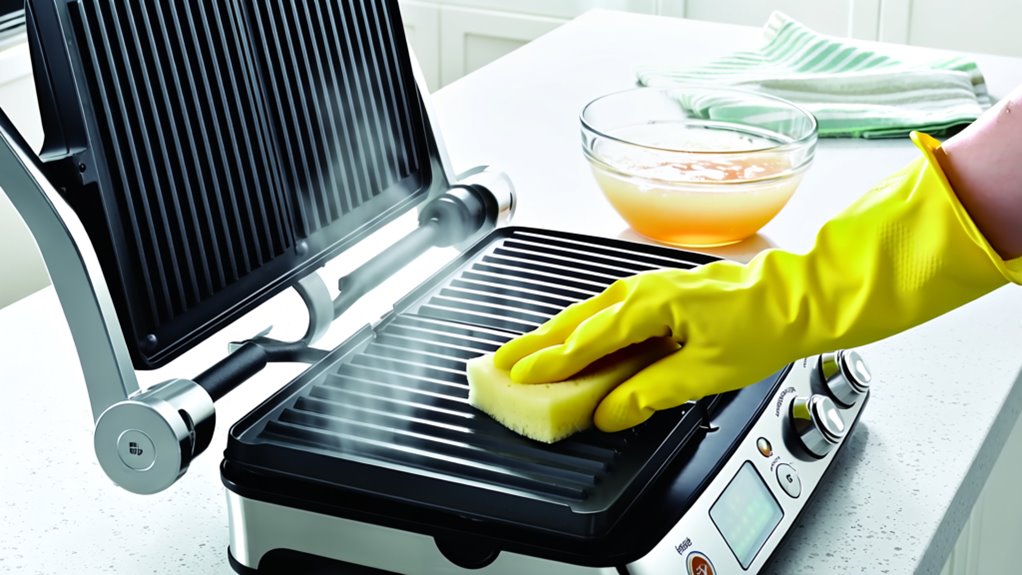
Prepare a mild soapy solution to gently scrub the plates with a soft sponge. For stubborn residue, sprinkle baking soda before scrubbing.
Clean the drip tray and exterior thoroughly.
Dry everything completely before storing your grill.
Following these simple steps will keep your George Foreman grill fresh and ready for your next meal.
There’s plenty more helpful advice ahead to ensure your grill stays in top condition.
Key Takeaways
- Unplug the grill and let it cool completely before starting the cleaning process to ensure safety and prevent burns.
- Use the included plastic scraper to remove stuck-on food, scraping from edges toward the center, and discard collected debris.
- Wipe the grill plates with a warm, damp cloth or sponge and mild soapy water to remove residue without damaging the non-stick surface.
- Clean the exterior and drip tray with mild soap, avoiding abrasives, then thoroughly dry all parts to prevent moisture buildup.
- Store the grill in a cool, dry place with protective covering, and regularly clean the exterior to maintain longevity and performance.
Unplug and Cool Your Grill Safely
Before you start cleaning, make certain you unplug your George Foreman grill right after cooking to avoid any electrical hazards. Safety comes first, so never clean your grill while it’s still plugged in or warm.
After unplugging, let the grill cool down for about 10-15 minutes. This cooling period is essential because handling a warm grill can cause burns or injuries. You’ll want to wait until the grill is completely cool to the touch before you begin any cleaning.
Trying to clean it too soon not only risks your safety but can also damage the grill’s components. By unplugging immediately and allowing it to cool properly, you set yourself up for a smoother and safer cleaning process. Taking these precautions guarantees you protect both yourself and your grill, making the next steps in cleaning more manageable and effective.
Remove Excess Food With a Plastic Scraper
Once your grill has cooled enough to handle safely, it’s time to tackle the leftover food particles. To clean your George Foreman effectively, start by using the plastic scraper that usually comes with the grill. Gently scrape away any stuck-on food from the grill plates, taking care not to scratch the non-stick surface.
Work from the edges toward the center, which helps gather debris efficiently and prevents pushing food into hard-to-reach spots. If you encounter stubborn residues, you can briefly plug in the grill and heat it for 1-2 minutes to soften the buildup. Once warmed, unplug it and use the plastic scraper again to remove the loosened food more easily.
After scraping, dispose of the collected crumbs in the trash or sink. This step is essential to prepare your grill for the next cleaning phase and guarantees your George Foreman stays in great condition for future use.
Wipe Plates While Still Warm
Right after cooking, wiping the grill plates while they’re still warm makes it easier to remove food residue before it hardens. You’ll find that grease and crumbs come off quickly, saving you time and effort.
Just be sure to use a damp cloth or paper towel with tongs to avoid burns.
Warm Surface Benefits
If you wipe the plates of your George Foreman grill while they’re still warm, you’ll find it much easier to remove food debris and grease. The heat softens stuck-on residue, so using a warm soapy cloth helps you clean the grill effectively without harsh scrubbing. This prevents damage to the non-stick surface and keeps your grill performing well longer.
| Benefit | Why It Helps | Result |
|---|---|---|
| Easier debris removal | Heat loosens food particles | Quick, effortless cleaning |
| Less scrubbing needed | Warm soapy cloth softens grease | Protects non-stick surface |
| Maintains grill quality | Prevents buildup and residue | Extends grill lifespan |
Cleaning while warm saves time and effort, making your grill ready for the next use faster.
Quick Residue Removal
Cleaning your George Foreman grill while the plates are still warm makes residue removal much faster and easier. Right after cooking, unplug your grill and wait just 1-2 minutes so it’s cool enough to handle but still warm.
To clean mine, I use non-metal tongs to hold damp paper towels, wiping the plates to loosen stuck-on food before it hardens. This quick step prevents residue from becoming stubborn and saves you time later. If you notice any tough grime, sprinkle baking soda on the warm surface and wipe again with a damp cloth—it breaks down residue effectively.
Prepare a Soapy Cleaning Solution
Start by filling a bowl or sink with warm water and adding a few drops of mild dish soap to create a gentle cleaning solution. Make certain the soap is free from abrasive ingredients to protect the non-stick surface of your George Foreman grill plates. Stir the water gently to dissolve the soap completely, forming a uniform soapy solution.
Keep this solution handy while cleaning, as you’ll need to dip a soft sponge or cloth into it—moist but not dripping—to avoid excess water on the grill. This helps loosen stubborn food residues without damaging the non-stick coating.
| Step | Tip |
|---|---|
| Use warm water | Enhances soap effectiveness |
| Choose mild soap | Protects the non-stick surface |
| Stir gently | Guarantees soap fully dissolves |
| Sponge dampness | Prevents excess water damage |
This soapy solution is key for gentle and effective cleaning.
Scrub Grill Plates With a Soft Sponge
Once you have your soapy solution ready, grab a soft sponge to gently scrub the grill plates. Using a soft sponge is crucial because it cleans effectively without damaging the grill plates’ non-stick surface. As you scrub, make certain to rinse the sponge frequently to remove grease and food particles, keeping your cleaning efficient.
If you notice stubborn food debris, soak the grill plates in warm soapy water for a few minutes beforehand to help loosen the residue. After scrubbing, wipe the grill plates again with a clean, damp sponge to remove any leftover soap. This step guarantees no soap residue remains, which could affect the taste of future meals.
Finally, let the grill plates air dry completely before putting them back into the grill. This prevents any moisture buildup that might cause issues later. Following these steps aids in keeping your George Foreman grill plates clean and in great condition.
Use Baking Soda for Stubborn Residue
A sprinkle of baking soda can make a big difference when dealing with stubborn residue on your George Foreman grill. This simple ingredient helps break down tough, stuck-on food particles effectively. Here’s how you can tackle it:
- Generously sprinkle baking soda over the stubborn residue or mix it with a little water to make a paste for better adhesion.
- Let the baking soda sit for 15-30 minutes to loosen the grime.
- Gently scrub the coated area with a soft sponge or plastic scraper to avoid damaging the non-stick surface.
- Rinse thoroughly with warm water to remove all baking soda and loosened residue.
Using baking soda this way guarantees you get rid of stubborn residue without harsh chemicals or scrubbing too hard. It’s a safe, effective method to keep your grill clean and ready for your next cookout.
Clean the Drip Tray and Exterior
Once your grill has cooled and unplugged, start by removing the drip tray and soaking it in warm, soapy water or placing it in the dishwasher.
Next, gently wipe down the exterior with a damp sponge and mild soap to keep it looking clean without damaging the finish.
Finally, make sure to dry all surfaces thoroughly to prevent streaks and maintain your grill’s appearance.
Removing Drip Tray Residue
Although it might seem tedious, cleaning the drip tray right after you use your George Foreman grill makes a big difference in preventing grease buildup. To effectively remove drip tray residue, follow these steps:
- Remove the drip tray immediately after cooking to avoid hardened grease.
- Soak the tray in warm, soapy water to loosen stuck-on food and grease.
- For a deeper clean, place the drip tray on the dishwasher’s top rack.
- Rinse thoroughly with clean water and dry with a soft towel.
Washing Exterior Surfaces
Before you start cleaning the exterior of your George Foreman grill, make sure it’s unplugged to avoid any electrical hazards. Begin by removing the drip tray; you can wash it by hand with warm, soapy water or place it in the dishwasher for convenience.
Next, focus on the exterior surfaces. Use a soft, damp sponge with mild soap to gently wipe down the outer casing. Avoid abrasive cleaners or scouring pads, as they can scratch and damage the surface.
After cleaning, thoroughly dry the exterior surfaces with a soft dish towel to prevent water spots and maintain its appearance. Regular cleaning not only keeps your grill looking good but also helps prevent grease buildup, enhancing its longevity.
Drying and Maintenance Tips
While you let the grill plates dry, make sure to empty and clean the drip tray thoroughly—it’s dishwasher-safe for easy cleanup. After washing, always let both the grill plates and drip tray dry before putting them back to prevent moisture buildup.
For the exterior, use a damp sponge with mild soap and hot water, then wipe with a dry soft dish towel to avoid water spots.
Follow these steps for proper drying and maintenance:
- Rinse the drip tray with hot water and place it in the dishwasher or hand wash it.
- Wipe the grill’s exterior with a damp sponge and mild soap.
- Dry all parts completely before reassembling.
- Regularly check and clean grease around heating elements.
Store your grill in a dry place, preferably covered.
Dry and Store Your Grill Properly
Once you’ve thoroughly cleaned your George Foreman Grill, you’ll want to let it air dry completely to prevent moisture buildup that can cause rust or damage. Make certain all removable plates and drip trays are fully dry before putting them back in. This keeps your grill working at its best and avoids any moisture-related issues.
When it comes to storing your grill, pick a cool, dry spot. Avoid stacking heavy items on it, as that can warp or damage the grill surface. If possible, keep it covered with a dust cover or in its original packaging to protect it from dust and debris.
Regularly check and clean both the grill’s exterior and the storage area to maintain its condition. Proper drying and storing will help extend the life of your George Foreman Grill and make sure it’s ready for your next cooking session.
Frequently Asked Questions
What’s the Easiest Way to Clean a George Foreman Grill?
The easiest way to clean your George Foreman grill is to unplug it and wipe the plates with damp paper towels right after cooking while it’s still warm. If the plates are removable, soak them in warm, soapy water, then scrub gently with a soft sponge. Use a plastic scraper for stubborn bits.
Don’t forget to clean the drip tray regularly, either by hand or in the dishwasher, to keep everything fresh and working well.
Is the George Foreman Grill Machine Washable?
You might think your George Foreman Grill is a dishwasher magnet, but it depends. If your grill has removable plates, you can pop those right on the bottom rack for a machine wash. Just soak them first if things are sticky.
But if your model’s plates aren’t removable, don’t dunk the whole grill in water or the dishwasher—it’s like inviting a storm inside, causing damage. Always check your manual to be sure!
How Often Should I Clean My George Foreman Grill?
You should clean your George Foreman grill after every use to keep it in top shape. If you skip cleaning for weeks or months, grease and food residue can build up, leading to burnt smells and poor performance. Regular cleaning prevents contamination and keeps your food tasting great.
Using non-stick spray before cooking also helps minimize residue, making your cleanup even easier. Don’t wait too long to clean it for the best results.
Can You Submerge a George Foreman Grill in Water?
Think of your George Foreman Grill like a delicate flower—submerging it in water would be like drowning it. No, you shouldn’t submerge your grill in water because it can damage the electrical parts and create safety risks like electrical shock.
Instead, unplug it and clean the surfaces with a damp cloth. If the plates are removable, soak those separately. Treat it gently to keep it blooming for years.
Conclusion
Now that your George Foreman grill’s plates gleam like morning sunlight, and the drip tray shines without a trace of last night’s sizzle, you’re ready. Feel the smooth, cool surface under your fingertips, knowing you’ve cared for it well.
Storing it safely means your next cooking adventure will be just as easy and delicious. With these simple steps, cleaning your George Foreman grill becomes a breeze, leaving you free to enjoy every tasty moment ahead. Proper maintenance ensures your grill stays in top shape for countless meals to come.