How to Use Just Two Burners on a Three-Burner Grill
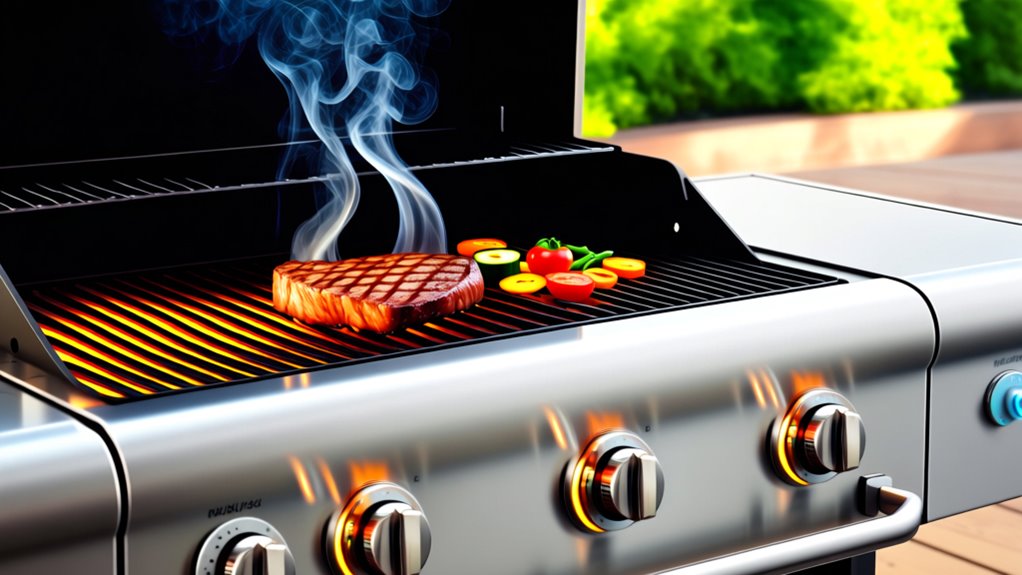
To use just two burners on your three-burner grill effectively, start by turning on the two outer burners to medium or low heat and leave the middle burner off.
This method allows you to create a perfect balance of direct heat on the edges and indirect heat in the center. It’s ideal for cooking delicate foods or larger cuts evenly over the cooler zone.
By adjusting the burner temperatures, you can tailor the heat to suit steaks, chicken, or slower cooking needs.
Keep a close eye on the grill’s temperature and rotate your food regularly for even results.
With this setup, you’ll master versatile grilling techniques and enjoy perfectly cooked meals every time.
Key Takeaways
- Turn on the two outer burners and leave the middle burner off to create direct heat zones on the sides and indirect heat in the center.
- Position food over the unlit middle burner for indirect cooking, ideal for larger cuts or delicate items needing gentle heat.
- Adjust the outer burners’ heat levels according to cooking needs, using higher heat for searing and lower heat for slow cooking.
- Rotate food halfway through cooking to ensure even heat exposure and consistent doneness across the surface.
- Preheat the grill and maintain clean grates to optimize heat distribution and prevent sticking during two-burner use.
Understanding Burner Layouts on Three-Burner Grills
Three-burner grills usually have burners arranged either front-to-back or side-to-side, giving you flexible cooking options. When you look inside, you’ll notice burner tubes running beneath the grill grates, distributing heat evenly across the cooking surface. These burner tubes are essential for controlling where the heat concentrates, which is key when using just two burners.
By turning off one burner tube, you create an indirect heat zone, perfect for cooking larger cuts of meat or delicate foods without direct flame. Typically, the outer burner tubes are used while the middle one remains off, providing consistent indirect heat. Understanding how the burner tubes are laid out helps you position your food accurately for the best results.
Performing a quick heat check across the grill can reveal hot and cooler spots, letting you adjust your cooking zones accordingly. This knowledge makes managing your three-burner grill simple and effective.
Setting Up Two Burners for Effective Two-Zone Cooking
Knowing how your burners are arranged sets the stage for creating effective two-zone cooking. To set up two burners on your three-burner grill, turn on the two outer burners to medium or low heat and leave the middle burner off. This creates distinct direct and indirect heat zones, giving you greater control.
Place your food over the unlit middle burner to use indirect heat, perfect for larger cuts or items needing slower cooking. Using two burners this way allows you to adjust temperatures based on what you’re grilling, ensuring ideal doneness. For best results, consider using a thermal survey to check heat distribution across the grill.
Also, rotate your food halfway through cooking to promote even exposure to indirect heat. By mastering how to set up two burners effectively, you’ll get consistent, delicious results every time you grill.
Positioning Food for Optimal Heat Distribution
When using two burners on your three-burner grill, position your food over the center grate where there’s no direct flame to create an even heat zone. Make sure to take advantage of the cooler middle area for larger cuts or longer cooking times.
Centering Food Between Burners
If you want your food to cook evenly, position it between the two active burners on your grill. By turning off the center burner and igniting the two outer burners, you create an indirect zone that surrounds your food with consistent heat without direct flames. Placing larger items, like roasts or whole chickens, in this central area allows ideal air circulation and balanced heat from both sides.
Keep the outer burners on low or medium to maintain steady temperatures, preventing scorching. As your food cooks, rotate it regularly to guarantee all sides benefit from the indirect heat generated by the two burners. This approach maximizes even cooking while using only two burners on your three-burner grill effectively.
Utilizing Grill Zones Effectively
Though your three-burner grill offers multiple heat zones, turning on just the outer two burners while leaving the middle off lets you create an ideal indirect cooking area. Position your food over the unlit middle burner to avoid direct flames, which is perfect for low and slow cooking. This setup guarantees even heat distribution, especially for larger cuts like whole chickens or roasts.
Keep the outer burners on medium or low to maintain consistent temperatures without flare-ups. By effectively using these grill zones, you control the cooking environment better, preventing burning or undercooking. Don’t hesitate to adjust burner settings and reposition food slightly to find the perfect balance for your grilling style and specific recipes.
Adjusting Burner Temperatures for Different Cooking Styles
Since different cooking styles demand varying heat levels, you’ll want to adjust your burners accordingly to get the best results. When using two burners on your three-burner grill, set the outer burners to the temperature that suits your cooking style while keeping the middle burner off. This setup helps you manage heat effectively for different meats and recipes.
Adjust your grill’s outer burners to match your cooking style, leaving the middle burner off for perfect heat control.
For example, higher heat works well for steaks, while lower heat is ideal for chicken or delicate items.
To adjust burner temperatures effectively:
- Turn on both outer burners for even heat distribution when grilling smaller items.
- Use one burner at medium or low heat with the adjacent burner off to cook larger cuts, rotating halfway through.
- Monitor grill temperature closely and tweak the two burners’ gas knobs to maintain consistent heat, ensuring nothing overcooks or undercooks.
Adapting your burner settings like this helps you master a variety of cooking styles with just two burners.
Creating Hot and Cool Zones for Versatile Grilling
When you want more control over your cooking, creating hot and cool zones on your three-burner grill is a smart approach. To do this, turn the two outer burners to high and leave the middle burner off. This setup gives you a hot zone on the edges for searing meats and a cool zone in the center for gentler, indirect grilling.
Using the cool zone lets you cook larger cuts slowly and evenly without burning them. You can also adjust the outer burners to medium or low to fine-tune your heat levels while still maintaining a reliable hot zone for quick searing. For better results, keep an eye on temperature differences across the grill surface to guarantee the hot zone stays consistent.
Placing a drip pan in the cool zone not only catches drippings but adds moisture and prevents flare-ups in the hot zone, improving flavor and safety during your cook.
Managing Heat for Low and Slow Cooking Techniques
To master low and slow cooking on your three-burner grill, you’ll want to turn off the middle burner and use the outer burners at low or medium heat, creating a perfect indirect zone.
Keeping the temperature steady between 225°F and 275°F is key, so using a digital thermometer aids a lot.
Placing a water pan in the indirect zone and rotating your meat halfway through guarantees even cooking and moisture throughout.
Burner Configuration Strategies
Although you might have a three-burner grill, using just two burners can give you excellent control for low and slow cooking. With smart burner configuration strategies, you’ll position your food over the unlit middle burner, creating indirect heat. Set the two outer burners to low or medium, or for larger cuts, turn off one outer burner and keep the other on low.
This setup helps maintain steady, even heat.
To optimize your burner configuration strategies:
- Perform a thermal survey to identify hot and cold zones
- Use a water pan in the indirect zone to retain moisture
- Rotate your food halfway through cooking for even heat distribution
These techniques guarantee consistent temperatures and better low and slow cooking results.
Temperature Control Techniques
Since maintaining a steady temperature is essential for low and slow cooking, you’ll want to focus on managing your grill’s heat carefully. Using temperature control techniques, turn on just the two outer burners, leaving the middle off to create indirect heat. Adjust the knobs to low or medium, making small changes while watching your thermometer to keep 225°F–275°F.
Place your food in the middle and consider adding a water pan to keep it juicy.
| Feeling | Action |
|---|---|
| Confident | Adjust knobs incrementally |
| Relaxed | Use water pan for moisture |
| Satisfied | Monitor temp with probes |
Mastering these techniques guarantees even cooking without flare-ups or dryness, giving you delicious results every time.
Optimizing Indirect Heat
Using just two burners on your three-burner grill lets you create an effective indirect heat zone that’s perfect for low and slow cooking. To optimize indirect heat, turn off the middle burner and set the outer burners to medium or low.
Place your food in the center, avoiding direct flames while still receiving steady heat. For best results, rotate larger cuts halfway through cooking to guarantee even heat distribution.
To get the most out of indirect heat:
- Use a water pan on the grates to maintain moisture and stabilize temperature.
- Adjust burner settings and monitor grill temperature with a thermometer.
- Position food centrally over the unlit burner for consistent, gentle cooking.
This setup helps you master low and slow techniques with efficient heat management.
Using Thermometers to Monitor Grill Temperature
Two probes on a dual thermometer can give you an edge when grilling on a three-burner setup. With a gas grill, one probe should be placed in the indirect cooking zone to monitor the ambient temperature, while the other goes into the thickest part of your meat to track internal doneness. This setup lets you keep an eye on both heat levels simultaneously, ensuring precise cooking without guesswork.
A grill thermometer on the grate also provides a quick reference for overall temperature, so you can easily adjust your burners. Many digital thermometers come with alarms that alert you when your grill or meat hits the desired temperature, freeing you from constant checking. Don’t forget to regularly calibrate your thermometers to maintain accuracy—it’s key for safe, successful grilling.
Using these tools effectively will help you master cooking with just two burners on your gas grill, delivering perfectly cooked meals every time.
Tips for Searing With Two Burners
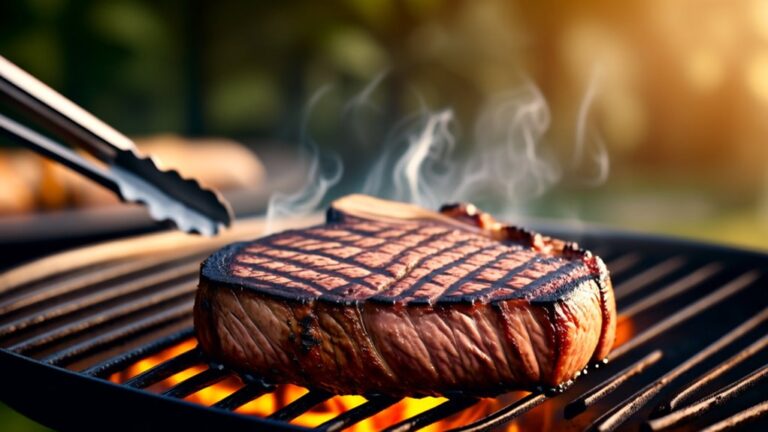
To get the best sear using two burners, turn on the outer burners high and leave the middle one off to create distinct heat zones. Position your meat directly over the lit burners for a quick crust, then move it to the cooler center to finish cooking.
Make sure your grill grates are preheated and placed properly to maintain consistent heat and prevent sticking.
Burner Placement Strategies
One effective way to sear your food on a three-burner grill is by lighting the two outer burners and leaving the middle one off, creating a perfect balance between direct and indirect heat. Using this burner placement strategy, you position your food over the two lit burners to get a strong sear with high heat.
The unlit middle burner acts as an indirect zone for finishing the cooking without burning.
Keep these burner placement strategies in mind:
- Set the outer burners to high for ideal browning.
- Rotate your food halfway to guarantee even searing.
- Move food to the middle burner after searing to cook through gently.
This method helps you control heat zones effectively while maximizing searing results.
Managing Heat Zones
Although managing heat zones on a three-burner grill might seem tricky, lighting the two outer burners while leaving the center off gives you the perfect setup for searing and indirect cooking. Place your meat directly over the lit burners for high, direct heat to form a flavorful crust. The Flavorizer Bars help distribute heat evenly and catch drippings, enhancing flavor and reducing flare-ups.
Once seared, move the meat to the cooler center zone to finish cooking gently. Keep the lid down to maintain heat and create a convection effect. Don’t forget to rotate your meat halfway through searing for even cooking, and use a grill thermometer to monitor internal temperature, ensuring you hit the perfect doneness every time.
Optimal Grate Positioning
When you’re searing with two burners on a three-burner grill, positioning your grates correctly is essential for even heat distribution and ideal crust formation. Make certain to place your food directly over the lit burners—usually the right burner and the left burner—while leaving the middle burner off to create an indirect zone. This setup allows you to sear with high heat and finish cooking gently.
Keep these tips in mind for best grate positioning:
- Position food over the right burner and the opposite burner for maximum heat.
- Use the middle burner as an indirect zone by turning it off.
- Rotate food halfway to guarantee even searing and prevent sticking.
This method guarantees perfect crust and consistent cooking every time.
Maintenance Practices to Support Two-Burner Grilling
Maintaining your grill properly is key to getting the best results from using two burners on a three-burner setup. Good maintenance practices start with regularly cleaning the cooking grates and Flavorizer Bars. This prevents hot spots and guarantees even heat distribution, which is especially important when only two burners are active.
Make sure to rotate the grates periodically to avoid uneven wear since you’re not using the middle burner as often. You should also inspect the burner tubes for blockages or damage, as any issues can reduce the performance of your two burners.
Keeping both the grill’s interior and exterior clean helps maintain proper airflow and cooking efficiency. Finally, get familiar with your grill’s heat zones and adjust burner settings accordingly. This will help you make the most of two-burner grilling and guarantee consistent, tasty results every time.
Enhancing Flavor and Moisture in Indirect Cooking
Since indirect cooking relies on gentler heat, you can boost both flavor and moisture by adding a water pan or infusing herbs and spices into the cooking environment. Placing the water pan in the indirect zone helps maintain humidity, preventing your food from drying out while adding subtle aromas. You can also use smoke tubes filled with wood pellets to introduce rich, smoky flavors that complement the slow cooking process.
Positioning your food strategically within the indirect zone is key to even cooking and moisture retention. Additionally, regularly basting with marinade or broth keeps the meat juicy and flavorful.
To enhance your indirect cooking experience, try these tips:
- Use a water pan with herbs or spices to infuse moisture and aroma.
- Add a smoke tube for a smoky flavor boost.
- Place larger items on a sheet pan over Flavorizer Bars to catch drippings and retain moisture.
These techniques help you master flavor and moisture when using just two burners on your three-burner grill.
Frequently Asked Questions
How Do You Indirect Grill With Two Burners?
To indirect grill with two burners, turn on the outer two burners to medium or low, leaving the middle burner off. Place your food in the center, so it cooks from the ambient heat instead of direct flames. This setup helps cook your food evenly without burning.
Keep an eye on the temperature, and you might wanna rotate larger items halfway through. Adding a water pan can keep things moist and steady the heat.
What Does Rubbing a Potato on a Grill Do?
Imagine your grill as a stubborn canvas, and rubbing a potato on it is like nature’s own eraser. When you rub a potato on your hot grill, it helps break down grease and stuck-on food thanks to its natural starches and enzymes. The moisture creates steam, loosening debris so you can wipe it clean easily.
It’s an eco-friendly hack that’s surprisingly effective—no harsh chemicals needed, just a humble spud doing the work.
How to Do Indirect Heat on a 3 Burner Grill?
To do indirect heat on your 3-burner grill, turn on the two outer burners to medium or low and leave the middle burner off. Place your food over the unlit middle burner, so it cooks away from direct flames. This method helps cook larger items evenly without burning.
You can add a water pan in the middle to keep things moist. Just keep an eye on the temperature to get perfect results.
Do You Turn on All Burners When Grilling?
You don’t always need to turn on all burners when grilling. For quick searing, yes, all burners blasting is perfect to get that intense, even heat.
But for slow, gentle cooking like roasting a chicken, turning off the middle burner and using just the outer two creates a cooler zone that prevents burning.
Conclusion
Now that you know how to use just two burners on your three-burner grill, you’re ready to master versatile cooking with ease. Why stick to one-zone grilling when you can create perfect hot and cool zones for searing and slow cooking? By positioning your food smartly and adjusting burner temperatures, you’ll reveal great flavors and juicy results every time.
So, don’t hesitate—embrace two-burner grilling for a more controlled, delicious barbecue experience. Using just two burners on a three-burner grill allows you to optimize heat zones and enhance your grilling techniques. This method not only improves flavor but also gives you greater control over cooking times and temperatures.