What Causes a Faucet to Drip
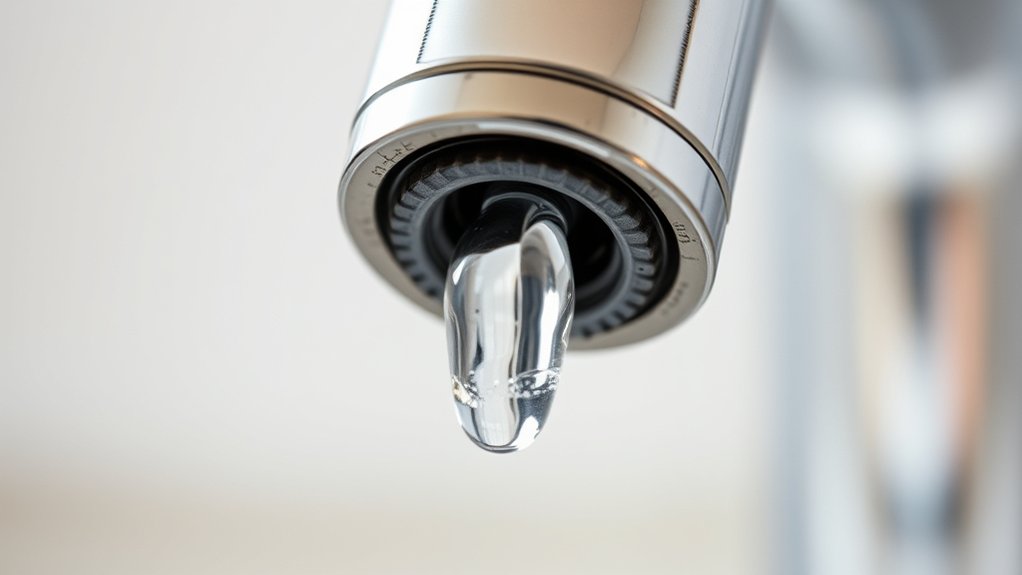
A faucet drips when internal parts become loose, allowing water to escape through small gaps. A common cause of a faucet drip is worn-out washers that no longer seal properly due to constant pressure and friction.
Mineral buildup can also obstruct seals by creating uneven surfaces, while corroded valve seats develop roughness that prevents a tight seal. These issues cause water to leak continuously.
If you want to understand how each cause affects your faucet and how to fix them, keep exploring these key problems.
How Loose Faucet Parts Cause Dripping
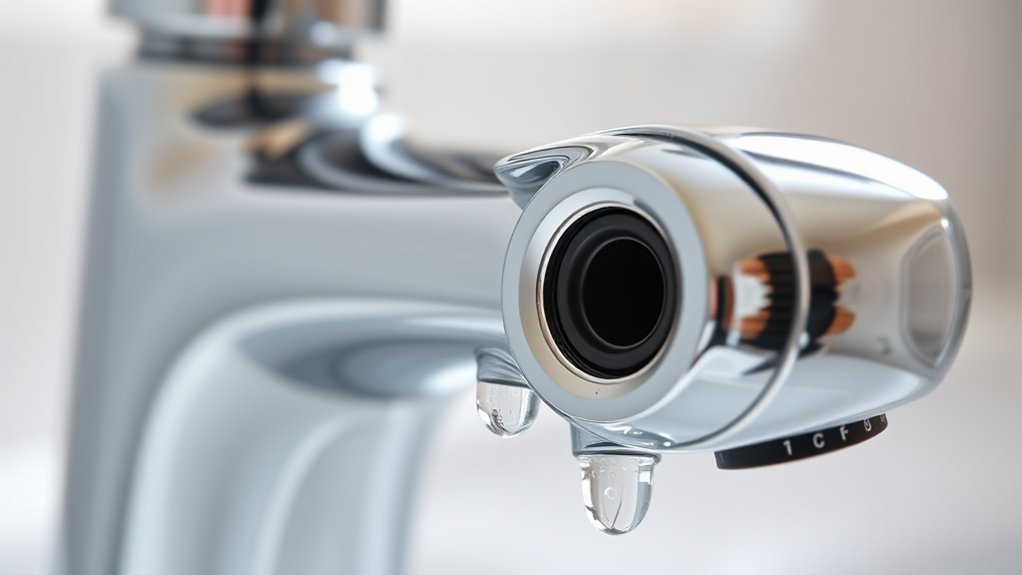
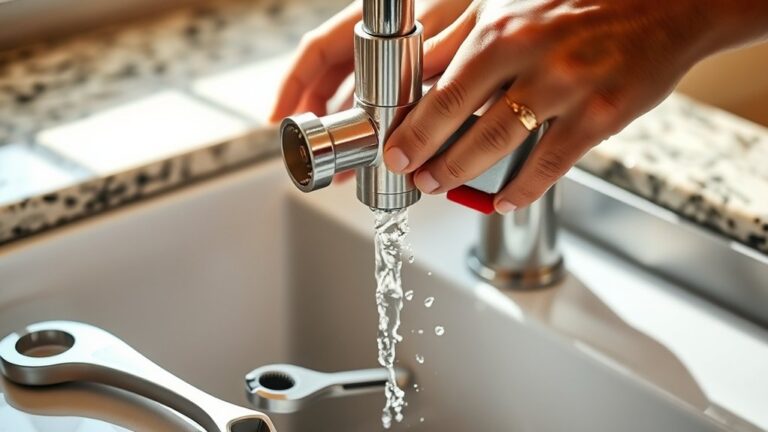
When faucet parts become loose, they create gaps that allow water to escape, causing a drip. You can often fix this issue through basic faucet maintenance by tightening screws, nuts, or other components.
Start by turning off the water supply to prevent further leaks. Then, use the appropriate tools to secure loose handles, spouts, or valves. Loose connections disrupt the seal integrity, leading to persistent drips.
Performing regular DIY repairs not only stops leaks but also extends the faucet’s lifespan. Confirm you inspect parts like the mounting hardware and cartridge housing for looseness during your maintenance routine.
Addressing these issues promptly prevents water waste and potential damage, making your faucet more efficient and reliable.
How a Worn-Out Washer Leads to Faucet Leaks
After tightening loose parts, you might still notice a drip caused by a worn-out washer. Washers endure constant pressure and friction, which gradually degrades their material. Poor washer material or installation errors, such as misalignment or overtightening, accelerate wear and cause leaks.
Replacing the washer with the correct type and ensuring proper installation is essential to stop the drip.
| Issue | Cause | Result |
|---|---|---|
| Washer material | Inferior rubber/plastic | Faster wear |
| Installation errors | Misalignment | Uneven pressure |
| Installation errors | Overtightening | Deformation |
| Washer material | Hardness mismatch | Poor seal |
| Wear over time | Constant friction | Leak develops |
Proper washer selection and installation prevent leaks effectively.
How Mineral Buildup Prevents Faucet Seals From Working
Although faucet seals are designed to create tight barriers, mineral buildup can obstruct their function by creating uneven surfaces and preventing proper sealing. When mineral deposits accumulate on the sealing surfaces, they compromise seal integrity by creating gaps where water can escape.
You’ll often find these deposits in areas with hard water, where calcium and magnesium leave behind residue. Over time, this buildup hardens and deforms the seal interface, reducing its ability to maintain a watertight connection.
To restore seal integrity, you need to remove mineral deposits using descaling agents or mechanical cleaning. Regular maintenance prevents excessive buildup, ensuring the seals perform effectively and stop leaks.
Ignoring mineral deposits allows persistent dripping, wasting water and increasing repair costs.
Why Corroded Valve Seats Cause Faucet Drips
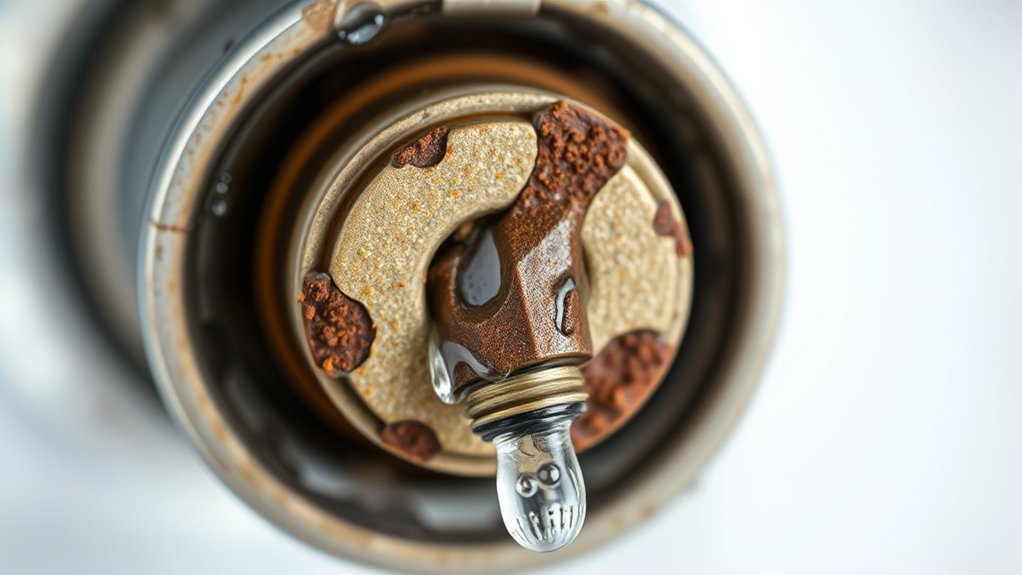
Mineral buildup doesn’t just affect faucet seals; it can also accelerate corrosion on valve seats, leading to leaks. When corrosion develops, it creates rough, uneven surfaces that prevent the valve seat from forming a tight seal with the washer or cartridge.
This compromised seal allows water to drip continuously, even when the faucet is off. To prevent this, prioritize regular valve maintenance, including cleaning and inspecting valve seats for early signs of corrosion.
Applying corrosion prevention techniques, such as using corrosion-resistant materials or protective coatings, can extend the valve seat’s lifespan. Ignoring valve seat corrosion not only causes drips but can also damage other faucet components, resulting in costly repairs.
Frequently Asked Questions
How Can I Fix a Dripping Faucet Without Calling a Plumber?
Like a skilled craftsman, you tackle DIY faucet repair by first turning off water, then checking washers and O-rings, common causes of drips. Replace worn parts carefully, reassemble, and test to stop that annoying leak efficiently.
What Tools Do I Need to Repair a Dripping Faucet?
You’ll need a wrench, screwdriver, pliers, replacement washers or cartridges depending on faucet types, and plumber’s grease.
Mastering specific repair techniques for compression, cartridge, or ball faucets guarantees you fix drips efficiently and correctly.
Can a Dripping Faucet Increase My Water Bill Significantly?
Yes, a dripping faucet can increase your water bill noticeably. Conduct a cost analysis to understand the financial impact.
Fixing leaks supports water conservation, reducing waste and lowering your utility expenses efficiently.
How Often Should I Maintain My Faucet to Prevent Drips?
Don’t wait for the other shoe to drop. Perform faucet maintenance tips every 6 months. Check for common faucet issues like worn washers or corrosion to nip drips in the bud and guarantee smooth, leak-free operation.
Are Certain Faucet Brands Less Prone to Dripping?
Yes, you’ll find that faucets made from durable materials like brass or stainless steel offer better drip prevention. Choosing brands focusing on quality components reduces wear, helping you avoid frequent leaks and costly repairs over time.