How Do You Stop a Leaky Faucet
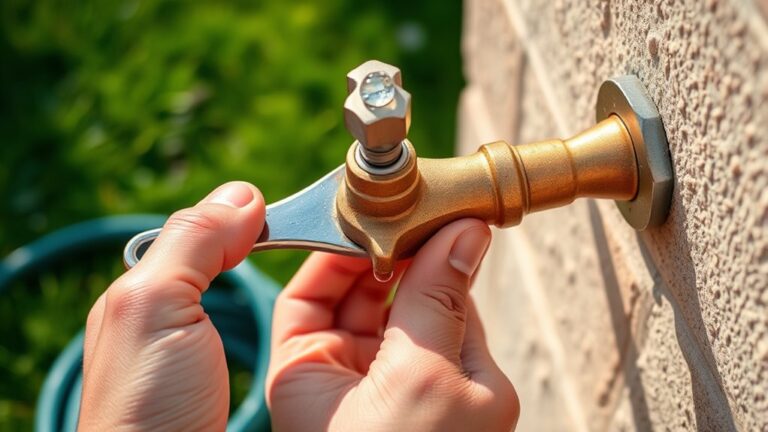
To stop a leaky faucet, start by turning off the water supply under your sink. This step is crucial to prevent water flow while you work.
Next, close the drain to avoid losing small parts down the pipe.
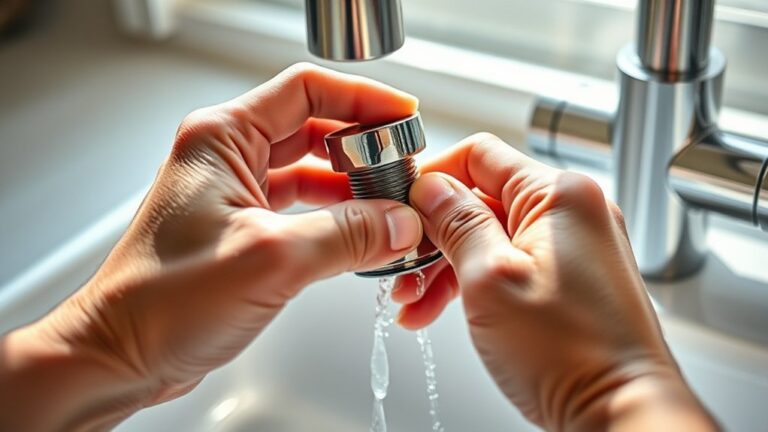
Use the right tools to remove the handle carefully. Inspect internal components such as washers, O-rings, or cartridges for signs of wear or damage.
Replace any faulty parts with proper fittings to ensure a secure fix.
After reassembling the faucet, test it for leaks to confirm the repair was successful. Proper maintenance can help prevent future issues.
Understanding common causes of leaks enables you to handle repairs more efficiently.
You can explore practical steps and tips for long-lasting faucet care next.
Easy Steps to Stop Your Leaky Faucet
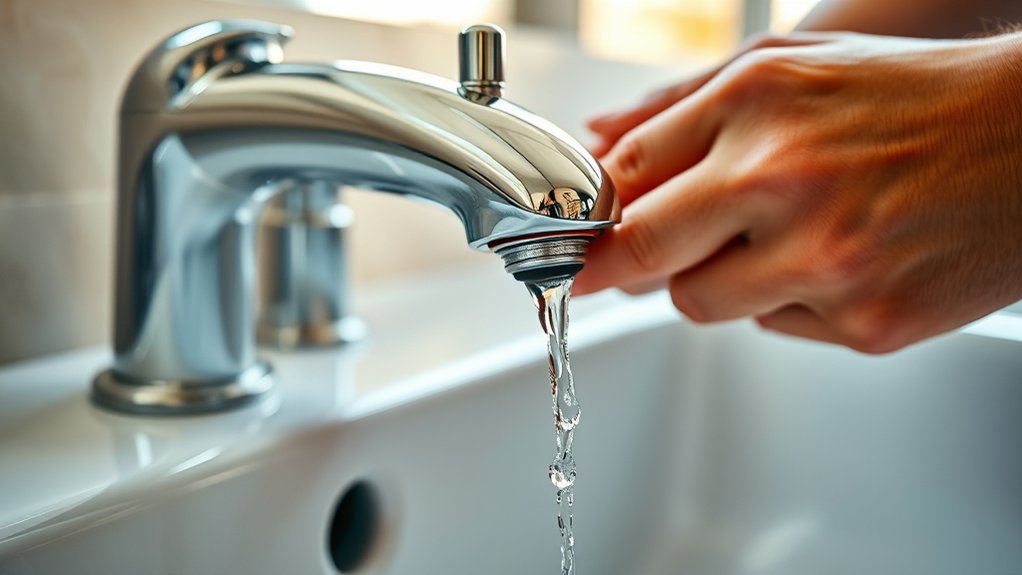
To stop your leaky faucet, start by turning off the water supply valves under the sink to prevent any flow. Next, close the drain to avoid losing small parts during your DIY repairs.
Remove the faucet handle using the appropriate tools, then inspect the internal components for wear or damage. Faucet maintenance often requires replacing washers, O-rings, or cartridges, which are common causes of leaks.
Remove the faucet handle to inspect and replace worn washers, O-rings, or cartridges causing leaks.
Clean any mineral buildup carefully before reassembling the faucet. Test the faucet by turning the water supply back on and checking for leaks.
Regular faucet maintenance can extend its lifespan and reduce water waste. Following these easy steps, you can quickly address minor leaks without calling a professional, saving time and money while improving your plumbing skills.
Figuring Out What’s Causing Your Faucet to Leak
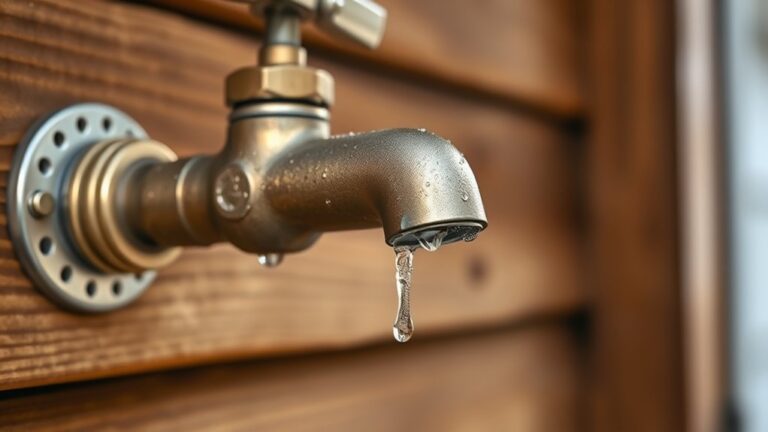
Why is your faucet leaking in the first place? Identifying the exact leak sources is critical before you fix it. Different faucet types, including compression, cartridge, ceramic disk, and ball faucets, have unique components that wear out differently.
For compression faucets, worn-out washers often cause leaks. Cartridge faucets typically leak due to damaged cartridges. Ceramic disk faucets might drip because of faulty seals, while ball faucets often leak from corroded or worn-out seats and springs.
Check for leaks around the spout, handle base, or underneath the sink. Pinpointing whether the drip originates from a valve seat, O-ring, or washer helps you target the repair. By understanding your faucet type and likely leak sources, you’ll efficiently diagnose the problem and prepare for a precise fix.
Tools and Materials to Fix a Leaky Faucet
To fix a leaky faucet, you’ll need essential repair tools like an adjustable wrench, screwdrivers, and plumber’s tape. Keep common replacement parts on hand, such as O-rings, washers, and cartridge kits.
Don’t forget basic safety gear like gloves and safety glasses to protect yourself during the repair.
Essential Repair Tools
A reliable set of essential repair tools guarantees you can efficiently tackle a leaky faucet without unnecessary delays. Start with an adjustable wrench and a set of screwdrivers, both flathead and Phillips, to remove faucet handles and fittings. Needle-nose pliers help you grip small components securely.
A basin wrench is vital for hard-to-reach nuts under the sink. Include plumber’s tape to guarantee watertight seals when reassembling parts. A flashlight aids visibility in tight spaces.
Using these tools allows you to apply precise repair techniques and follow maintenance tips effectively, minimizing damage risk. Equipping yourself properly streamlines the repair process, preventing trial-and-error attempts.
With these tools, you’ll confidently address leaks and extend your faucet’s lifespan through timely, accurate interventions.
Common Replacement Parts
Replacement parts form the backbone of any successful faucet repair, ensuring you can restore proper function quickly. When addressing a leaky faucet, you’ll encounter various cartridge types and washer options that fit specific faucet models. Selecting the correct parts is essential for an effective fix.
Key replacement parts include:
- Faucet cartridges (disc, compression, ceramic) tailored to your faucet type
- Rubber washers in multiple sizes and thicknesses for sealing leaks
- O-rings that prevent water from escaping around moving parts
- Valve seats that connect cartridges or washers and may need resurfacing or replacement
- Stem assemblies which may wear out and cause persistent drips
Safety Equipment Needed
Three essential safety items you’ll need before fixing a leaky faucet include gloves, safety goggles, and a reliable wrench. Start by wearing safety gloves to protect your hands from sharp edges and hot water. These gloves also improve your grip on slippery components, reducing the risk of injury.
Next, put on eye protection. Safety goggles shield your eyes from water splashes and debris that may dislodge during repair. Finally, use a reliable wrench to avoid slipping and damaging fittings or hurting yourself.
Confirm all safety equipment fits properly and is in good condition. Using this gear guarantees you work safely and efficiently, preventing accidents while maintaining control throughout the faucet repair process. Prioritize safety gloves and eye protection to keep hazards at bay.
Replacing Common Worn Faucet Parts
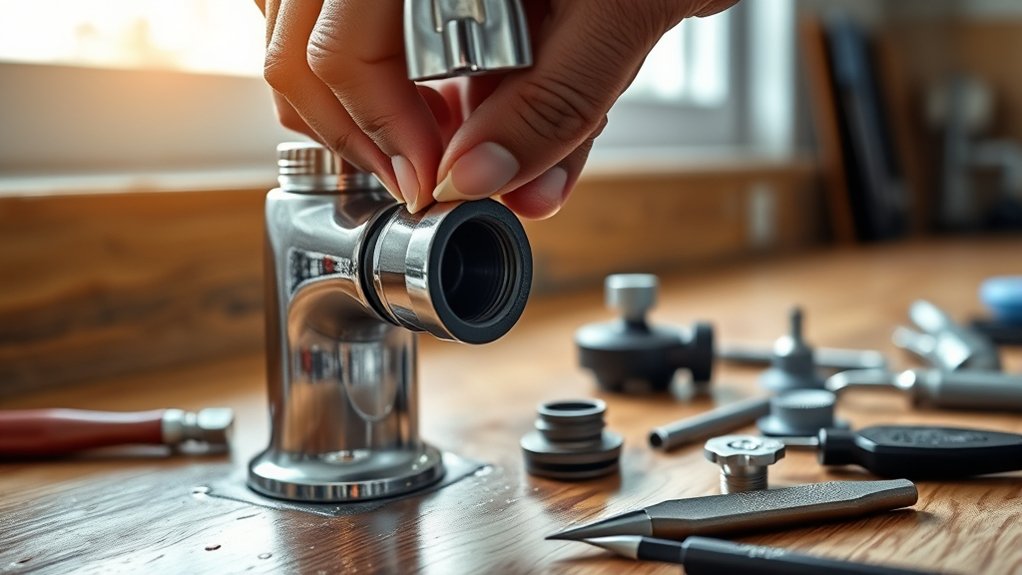
First, you’ll need to identify which faucet parts are worn or damaged, such as washers, O-rings, or cartridges. Once you pinpoint the faulty components, remove them carefully to avoid damaging surrounding hardware.
Then, install the exact replacement parts, ensuring they fit securely to stop the leak effectively.
Identifying Worn Components
When your faucet starts dripping, it usually means one or more internal components have worn out. To fix the leak, you need to identify which parts are faulty. Focus on these common culprits:
- Worn washers that no longer provide a tight seal
- Corroded seals causing water to bypass valves
- Damaged cartridges that disrupt water flow control
- Loose fittings allowing water to escape
- Old O rings that have hardened or cracked
Also, inspect for cracked bodies in the faucet assembly, which can cause leaks difficult to stop without replacement. By carefully examining these components, you’ll pinpoint the exact source of the drip. Identifying worn parts accurately saves time and money before you move on to replacing them.
Installing Replacement Parts
After identifying the worn components causing your faucet to leak, you’ll need to remove the damaged parts carefully to install replacements. Start by turning off the water supply and opening the faucet to relieve pressure.
Depending on your faucet type, compression, cartridge, ball, or ceramic disc, use the appropriate replacement techniques. For compression faucets, remove the stem assembly and replace washers and O-rings.
Cartridge faucets require pulling out the cartridge and inserting a new one. Ball faucets involve replacing the ball, seals, and springs, while ceramic disc faucets need new ceramic discs.
Use proper tools to avoid damage, and apply plumber’s grease to seals to guarantee smooth operation. Once installed, reassemble the faucet, turn the water back on, and test for leaks to confirm the repair.
When to Call a Plumber

Although many faucet leaks can be fixed with basic tools, you should call a plumber if the leak persists despite your repairs or if you encounter issues like damaged pipes, worn-out valves, or unclear water sources. Proper faucet maintenance and understanding plumbing basics help you identify when a problem exceeds DIY scope.
Many faucet leaks are fixable, but persistent issues or damaged parts require professional plumbing expertise.
Call a professional if you notice:
- Persistent leaks after replacing washers or cartridges
- Corroded or cracked pipes causing water damage
- Faulty valves that won’t shut off water flow
- Unusual noises or low water pressure linked to faucet components
- Difficulty locating the leak source or accessing plumbing parts
Recognizing these signs guarantees timely intervention, preventing further damage and costly repairs. Don’t risk worsening the issue. Hire a plumber to handle complex faucet and plumbing system problems.
Tips to Prevent Future Faucet Leaks
To prevent future faucet leaks, you need to perform regular maintenance and use quality components. Start by inspecting your faucet for worn washers, O-rings, and seals every few months as part of your preventive maintenance routine. Replace any damaged parts promptly to avoid water waste and damage.
Clean faucet aerators and cartridges regularly to prevent mineral buildup that can impair function. Use manufacturer-recommended lubricants on moving parts to reduce wear. Avoid overtightening handles, which can cause seal damage.
Additionally, maintain water pressure within recommended levels to reduce stress on faucet components. Proper faucet care involves timely repairs and using genuine replacement parts. Following these practical steps will extend your faucet’s lifespan and minimize the risk of leaks, saving you time and money in the long run.
Frequently Asked Questions
Can a Leaky Faucet Affect My Water Bill Significantly?
Yes, a leaky faucet can cause significant water waste, leading to a noticeable cost impact on your water bill.
Fixing leaks promptly helps you avoid unnecessary expenses and conserves water efficiently.
Are There Environmentally Friendly Options for Fixing Leaks?
You don’t have to summon a green wizard to fix leaks. Just use eco friendly materials like recycled rubber washers and embrace sustainable practices such as water-saving aerators. These practical steps reduce waste and save resources efficiently.
How Long Does It Typically Take to Fix a Leaky Faucet?
Faucet repair time typically takes 20 to 45 minutes, depending on the leak’s severity.
You’ll need common tools like a wrench, screwdriver, and replacement washers or O-rings to complete the job efficiently and effectively.
What Health Risks Are Associated With a Persistent Faucet Leak?
A dripping faucet is a ticking time bomb for your health. It compromises water quality and encourages mold growth, which can trigger respiratory issues and allergies.
Address leaks promptly to protect your indoor environment and wellbeing.
Can a Leaky Faucet Cause Damage to My Home’s Structure?
Yes, a leaky faucet can cause damage to your home’s structure by promoting mold growth and accelerating faucet corrosion.
Addressing leaks promptly prevents water infiltration, preserving structural integrity and avoiding costly repairs related to moisture damage.