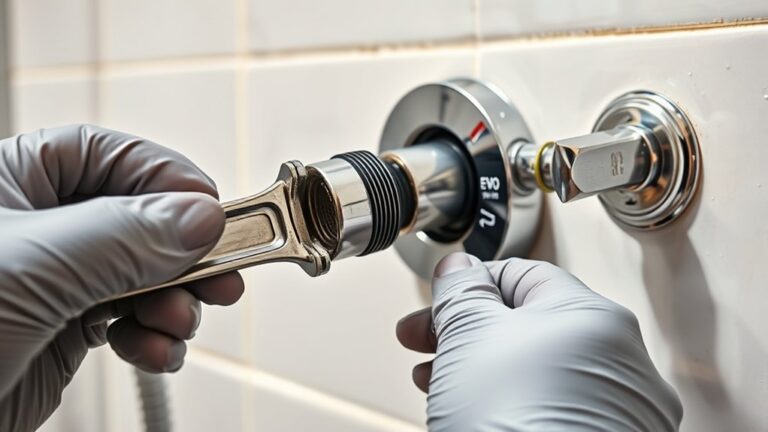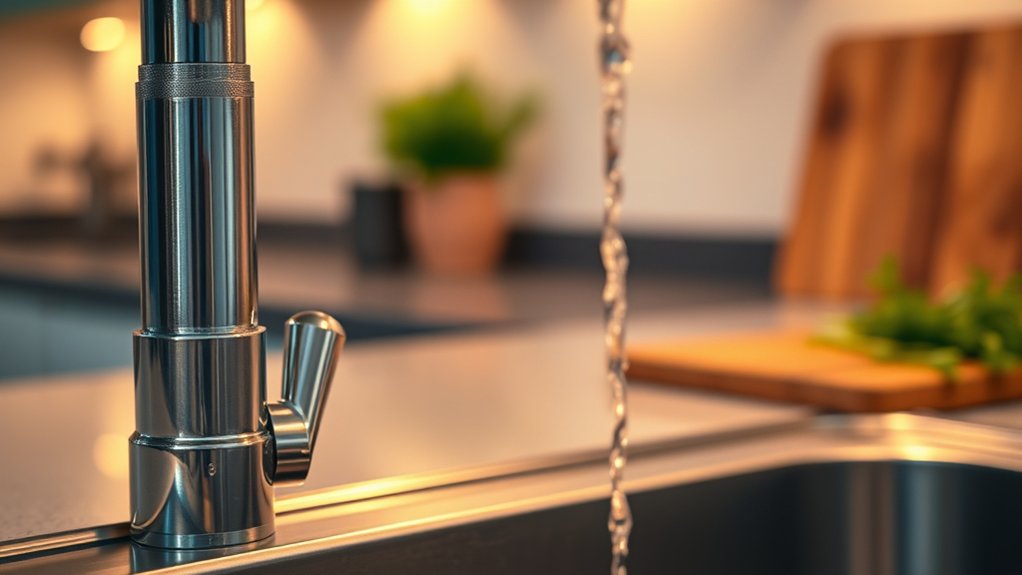
What Temp to Drip Faucets
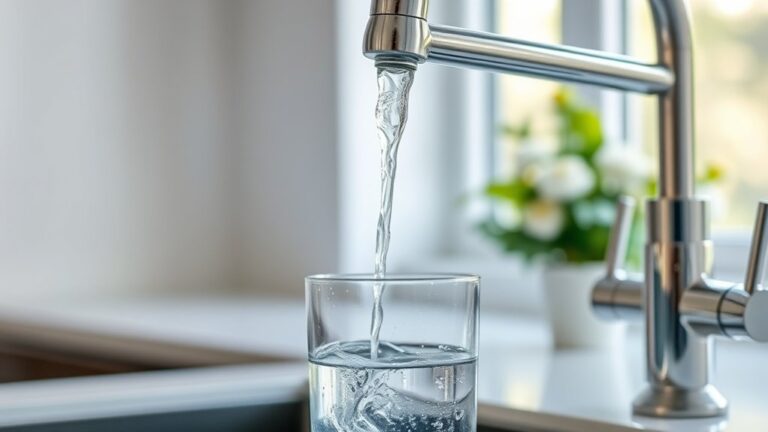
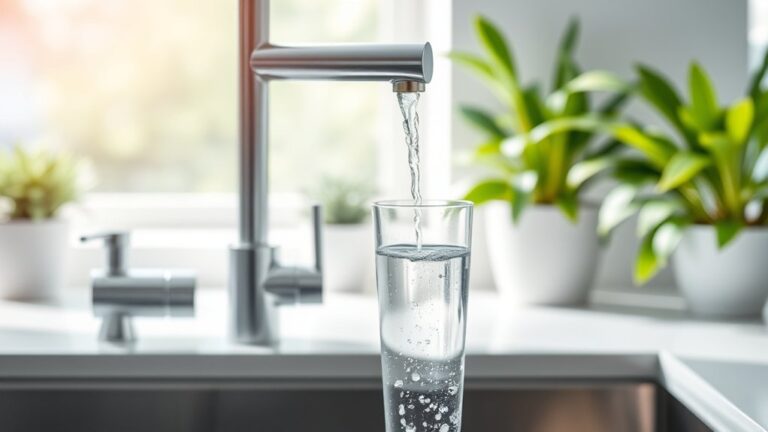
You should set your faucet to drip cold water at about 33°F to 40°F to prevent freezing without wasting energy.
Dripping faucets at this temperature range helps protect your plumbing during cold weather. A slow, steady drip of roughly one drop per second keeps water moving and reduces the risk of pipe bursts.
Avoid using hot water, as it’s usually unnecessary and inefficient.
Monitor your faucet temperature carefully and adjust as needed during cold spells.
For a deeper understanding of protecting your plumbing effectively, explore additional temperature and insulation strategies.
Why Faucet Temperature Matters to Prevent Frozen Pipes
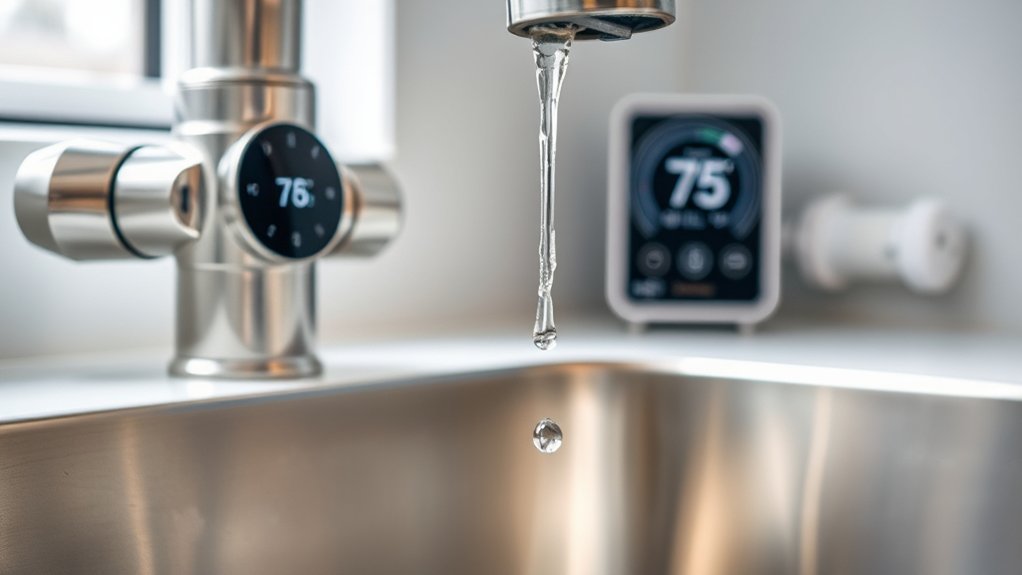
Although it might seem minor, maintaining the right faucet temperature is essential to prevent pipes from freezing. When water temperature drops near or below freezing, the risk of frozen pipes increases considerably.
You need to guarantee consistent water flow at a temperature that keeps water moving without allowing it to cool to freezing levels inside the pipes. Proper temperature management prevents ice blockages that can cause pipes to burst.
If the faucet’s temperature is too low, water flow slows or stops, promoting ice formation. Conversely, water that is too hot can waste energy and damage fixtures.
Should You Let Faucets Drip Warm, Cold, or Hot Water?
How do you decide whether to let your faucets drip warm, cold, or hot water to prevent freezing? Generally, cold water is preferred because it reduces energy use and minimizes wear on your water heater.
Warm water can be used if your hot water lines are more vulnerable to freezing, but it increases energy consumption and complicates water conservation efforts. Hot water dripping is rarely necessary and wastes significant energy.
Adjust your drip frequency based on temperature and pipe exposure; a slow, steady drip is usually sufficient to keep water moving and prevent freezing. Prioritizing cold water dripping aligns better with water conservation goals, balancing freeze prevention with minimizing resource waste.
Select the temperature that protects your pipes effectively while conserving water and energy.
How to Set the Best Faucet Temperature for Winter Dripping
To set the best faucet temperature for winter dripping, aim for a range between 40°F and 60°F to keep water moving without wasting energy. This temperature helps prevent pipe freezing by maintaining a steady flow that’s warm enough to avoid ice buildup.
Adjust your faucet settings accordingly to balance protection and efficiency during cold weather.
Ideal Drip Temperature Range
When setting your faucet to drip during winter, maintaining the temperature just above freezing is essential to prevent pipe damage without wasting energy. Aim for a temperature range between 33°F and 40°F (1°C to 4°C).
Staying within this range balances the temperature impact on water flow and energy consumption, ensuring your pipes don’t freeze while avoiding excessive heat loss. Adjust the drip rate to a slow, steady drip, about one drop per second, to maintain movement in the pipes without unnecessary water waste.
Preventing Pipe Freezing
Although setting the correct faucet temperature is essential, you also need to take into account the specific environmental conditions around your pipes to prevent freezing. To effectively stop pipe freezing, make certain your pipes have adequate pipe insulation, especially in unheated areas like basements or crawl spaces.
This insulation retains heat and reduces the risk of frozen pipes during prolonged cold spells. Incorporate this step as part of your winter maintenance routine to maintain system integrity. Additionally, monitor external temperatures closely; if conditions drop below freezing for extended periods, a slightly warmer drip temperature may be necessary.
Combining proper faucet temperature control with thorough pipe insulation and consistent winter maintenance provides a reliable defense against pipe freezing and costly damage.
Adjusting Faucet Settings
Since maintaining a steady drip prevents freezing, you’ll need to set your faucet temperature carefully to balance water flow and energy efficiency. Begin by adjusting the faucet’s temperature control to a warm setting, typically between 85°F and 100°F. This range guarantees water flows without wasting excessive heat.
Monitor the drip to confirm it’s continuous but minimal, reducing water waste while preventing pipe freezing. Regular faucet maintenance is essential; check for leaks and verify that temperature controls operate smoothly.
Avoid extreme hot or cold settings, as they can either increase energy consumption or fail to keep pipes from freezing. By fine-tuning your faucet’s temperature control and performing routine maintenance, you’ll effectively protect your plumbing during winter without unnecessary resource use.
When and How to Adjust Faucet Temperature During Freezing Weather
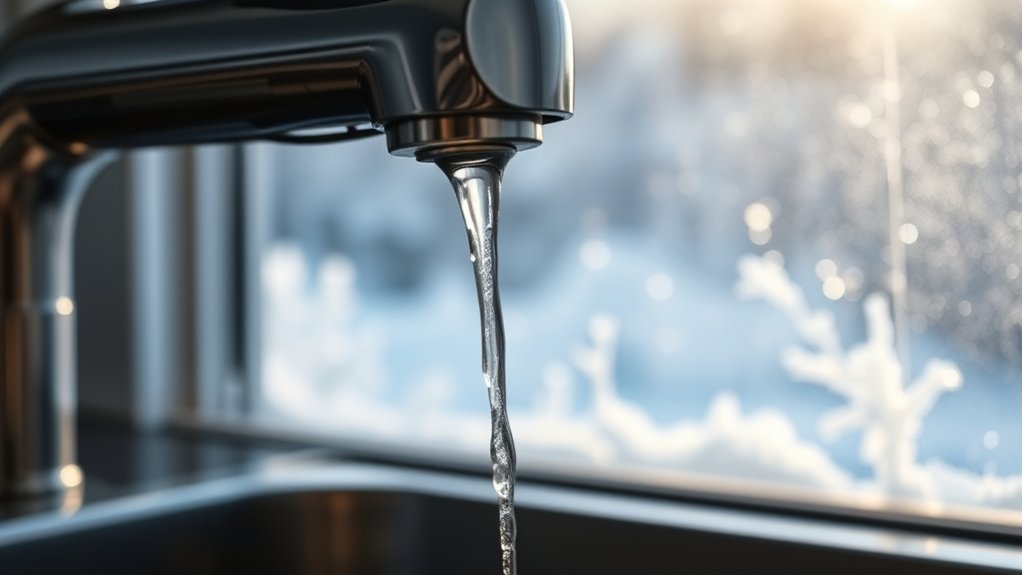
Because freezing temperatures increase the risk of pipe damage, you’ll need to adjust your faucet’s drip temperature carefully to prevent freezing without wasting water or energy. Start by setting the faucet’s temperature just above freezing, around 40°F (4°C), to maintain a slow but steady flow of water. This prevents ice formation inside pipes while conserving resources.
Monitor local weather forecasts to anticipate prolonged freezes and adjust accordingly. During winter preparation, inspect your faucets and pipes for insulation gaps and leaks as part of routine faucet maintenance. Use faucet covers or insulation sleeves if necessary.
Avoid setting the temperature too high, as excessive heat can increase energy costs and stress your plumbing. By managing faucet temperature precisely, you minimize freeze risks and maintain system integrity efficiently.
How Faucet Temperature Affects Your Water and Utility Bills
When you set your faucet temperature higher than necessary, your water heater works harder, driving up energy consumption and utility bills. Heating water beyond practical needs wastes energy and increases costs.
By adjusting your faucet to a moderate drip temperature, you optimize water usage and reduce unnecessary heating cycles. This balance supports effective water conservation, minimizing both water and energy waste.
Adjusting your faucet to a moderate drip temperature conserves water and energy efficiently.
Lowering the drip temperature slightly can yield significant utility savings without compromising freeze protection. Monitoring and maintaining an efficient temperature reduces strain on your water heater, prolonging its lifespan and improving overall system efficiency.
Applying precise temperature control aligns with best practices for sustainable home maintenance, ensuring you manage your water and energy resources responsibly while keeping utility expenses in check.
Mistakes to Avoid When Setting Your Faucet Drip Temperature
Improperly setting your faucet drip temperature can undermine the efficiency gains you’ve achieved with careful adjustment. One common mistake is neglecting precise temperature monitoring. Without it, you risk setting the water too cold, failing to prevent freezing, or too hot, wasting energy.
Another error is ignoring drip frequency. Too infrequent drips won’t maintain a protective flow, while excessive drips increase water waste and utility costs. You should calibrate the drip frequency based on outdoor temperatures and pipe insulation quality.
Avoid relying on guesswork. Use a thermometer to verify water temperature at the faucet and adjust accordingly. Maintaining consistent monitoring guarantees your faucet drip temperature stays optimized, balancing freeze prevention with resource conservation effectively.
Extra Tips to Protect Pipes During Winter Besides Drip Faucets

To further protect your pipes during winter, start by insulating any exposed sections with foam or fiberglass sleeves to reduce heat loss. Next, seal drafty areas around windows, doors, and foundation cracks to prevent cold air from reaching your plumbing.
These steps work alongside dripping faucets to minimize the risk of freezing and bursting pipes.
Insulate Exposed Pipes
Although dripping faucets can help prevent freezing, insulating exposed pipes offers a more direct and effective defense against winter damage. You should wrap vulnerable pipes with high-quality pipe insulation designed to retain heat and prevent exposure to cold air. Foam sleeves or fiberglass wraps work well for this purpose.
Additionally, applying heat tape along pipes provides controlled warmth, especially in areas prone to extreme cold. Heat tape plugs into an electrical outlet and maintains a consistent temperature to prevent ice formation.
When installing pipe insulation or heat tape, make sure you follow manufacturer guidelines precisely, avoid overlapping heat tape, and secure insulation tightly to avoid gaps. Combining these methods minimizes the risk of pipe bursts, saving you costly repairs and maintaining water flow throughout freezing conditions.
Seal Drafty Areas
Sealing drafty areas is one of the most effective steps you can take to protect your pipes during winter. Focus on drafty windows and other openings where cold air enters. Apply weather stripping around window frames to block cold drafts and maintain consistent indoor temperatures.
This reduces the risk of pipe freezing by preventing cold air from lowering indoor temperatures near vulnerable plumbing.
Use this table to guide your sealing efforts:
| Area | Recommended Material | Purpose |
|---|---|---|
| Drafty windows | Weather stripping | Blocks cold air infiltration |
| Door frames | Foam sealant | Seals gaps and cracks |
| Vents | Vent covers | Prevents cold air entry |
| Basement openings | Caulk or spray foam | Insulates pipe-adjacent areas |
Seal effectively to maintain warmth and prevent costly pipe damage.
Frequently Asked Questions
Can Dripping Faucets Prevent Pipes From Bursting in All Climates?
You can’t rely solely on dripping faucets to prevent pipes from bursting in all climates. Combine pipe insulation with dripping during freezing temperatures to reduce risk effectively, especially in areas exposed to extreme cold.
Does Dripping Faucets Waste a Significant Amount of Water Annually?
You conserve water by dripping faucets, but you also waste it; you save pipes but increase usage.
A precise cost analysis reveals dripping faucets use more water annually, impacting water conservation efforts and utility bills considerably.
Is It Safe to Leave Faucets Dripping Overnight During a Freeze?
Yes, it’s safe to leave faucets dripping overnight during a freeze if you maintain a consistent faucet temperature above freezing. This drip provides freeze protection by preventing water inside pipes from solidifying and causing damage.
Can Dripping Faucets Damage Plumbing Fixtures Over Time?
Dripping faucets won’t damage fixtures if done correctly, but neglecting fixture maintenance can cause wear over time.
You’ll save on plumbing costs by monitoring drips and addressing leaks promptly, ensuring system longevity and efficiency.
Should Outdoor Faucets Be Dripped Differently Than Indoor Ones?
You should drip outdoor faucets more slowly to prevent freezing, given outdoor faucet considerations like exposure to cold.
Indoor faucet strategies can use a steadier drip since indoor temperatures remain stable, reducing freeze risk effectively.