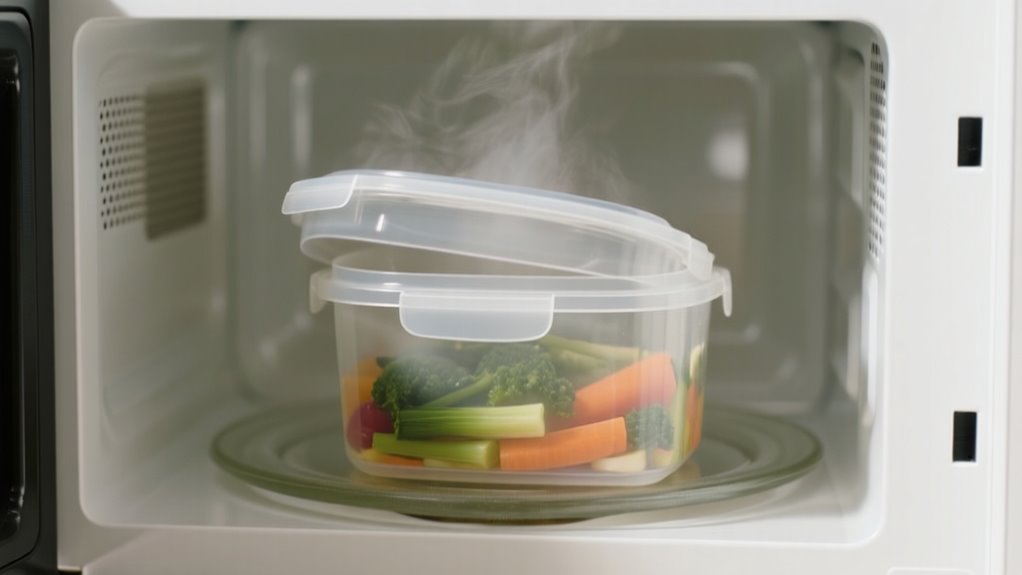
How You Can Safely Put Plastic in the Microwave Oven
To safely microwave plastic, always choose containers labeled microwave-safe, ideally made of polypropylene (#5).
Using the right plastic containers helps minimize health risks associated with heating plastics in the microwave.
Avoid heating fatty or acidic foods in plastic, as they boost chemical leaching risks.
Check your containers for cracks or warping before use, and never microwave scratched or damaged plastics.
Use plastic wrap labeled microwave-safe, keeping it vented and away from direct food contact.
Following these steps helps reduce health risks, and if you want to understand more about plastic types and best practices, keep exploring the details.
Key Takeaways
- Only microwave plastics labeled “microwave-safe” and preferably choose polypropylene (#5) for better heat resistance. Avoid heating fatty or acidic foods in plastic containers to reduce chemical leaching risks. Inspect plastic containers for cracks, warping, or damage before microwaving.
- Use microwave-safe plastic wrap without direct food contact and leave a vent for steam to escape. Consider safer alternatives like microwave-safe glass or ceramic containers to minimize health risks.
Understanding Microwave-Safe Plastic Labels
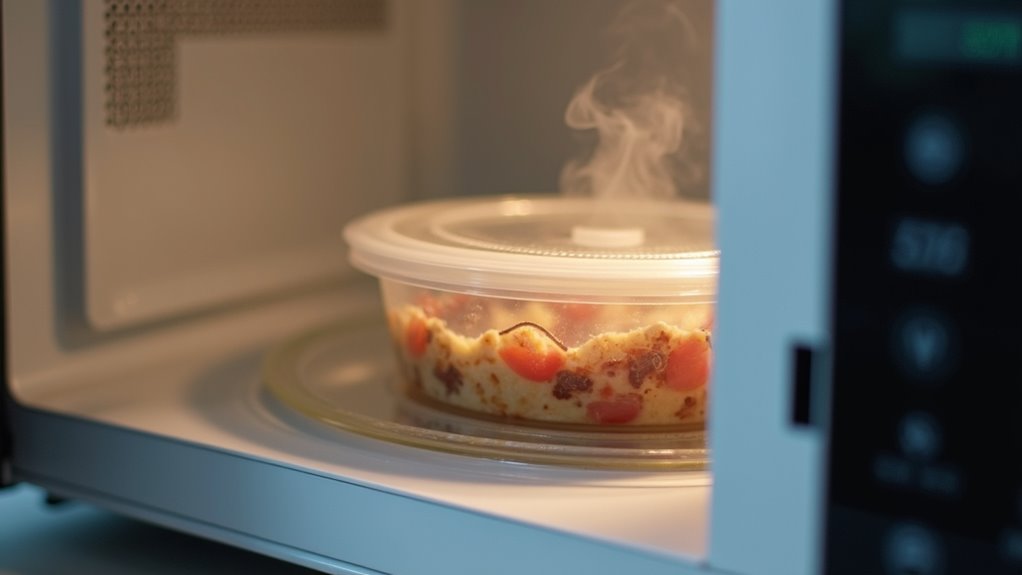
Although microwave-safe plastic labels indicate that a container has passed safety tests, they don’t guarantee it’s completely free from chemical leaching. When you see a microwave-safe label, it means the manufacturer tested the plastic under specific conditions and deemed it suitable for microwave use. However, the plastic’s integrity can degrade over time, especially with repeated heating, which may increase the chance of chemicals leaching into your food.
Not all microwave-safe plastics are created equal—polypropylene (#5 plastic) tends to withstand microwave heat better than others. You should always check containers for cracks, scratches, or wear before using them in the microwave, as damaged plastics may pose higher risks. To stay safe, follow the manufacturer’s instructions carefully regarding microwave use.
Understanding what a microwave-safe label truly means helps you make smarter choices and reduces potential exposure to harmful chemicals when heating your meals.
Risks Associated With Microwaving Plastic Containers
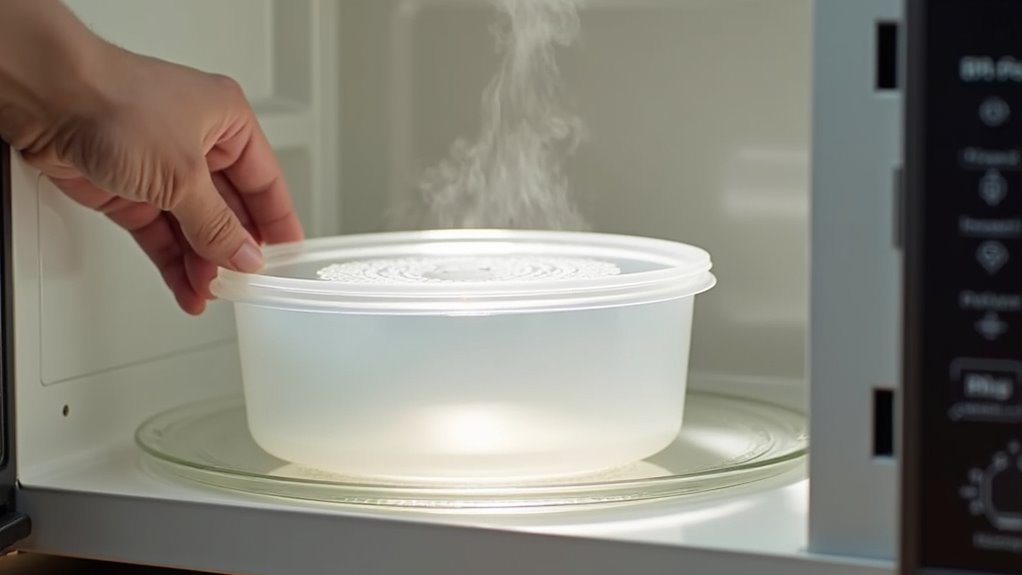
When you microwave plastic containers, you risk harmful chemicals like BPA leaching into your food, especially if the containers are scratched or reused. Even if plastic containers are labeled microwave safe, these labels rely on manufacturer testing and don’t guarantee zero chemical release. Fatty or acidic foods can increase the leaching rate, making it more likely that harmful substances enter your meal.
Damaged or worn plastic containers pose an even greater risk and should be discarded to protect your health. While regulatory standards in Canada work to limit plasticizer release from food-grade plastics, ongoing research highlights that microwaving plastics still carries some uncertainty. To minimize risks, always use containers specifically designed for microwave use, avoid heating fatty or acidic foods in plastic, and never reuse scratched or cracked plastic containers.
Being cautious helps you reduce exposure to potentially harmful chemicals when heating food in the microwave.
Identifying Harmful Chemicals in Plastics
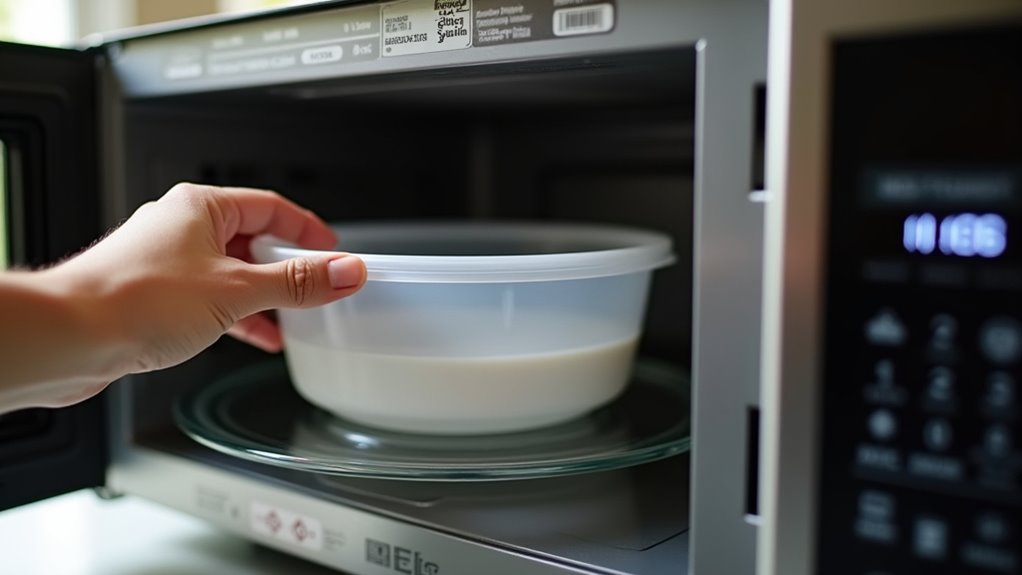
How can you tell which plastics might release harmful chemicals when microwaved? Knowing this helps you avoid potential health risks from substances like Bisphenol A (BPA). Here’s what to watch for:
- Check the recycling code: Plastics marked with #3 (PVC), #6 (polystyrene), and #7 (other, including BPA-containing plastics) often leach chemicals when heated. Avoid using these in the microwave.
- Look for microwave-safe labels: Only use containers and plastic wrap specifically labeled as microwave-safe, ensuring they’re tested to minimize chemical release.
- Inspect for damage: Scratches or reused plastic wrap and containers increase the chance of chemicals leaching into your food when heated.
How Food Type Affects Chemical Leaching in Plastics
Because certain foods interact differently with plastics, you should consider what you’re microwaving to reduce chemical leaching risks. Fatty or oily foods like cheese and meat increase the chance that harmful chemicals, such as BPA, will leach from the plastic into your food. Acidic foods can also trigger higher levels of plasticizers to migrate from plastic containers, raising safety concerns.
The temperature at which you microwave your food plays a significant role too—higher heat accelerates chemical leaching. Since studies show that the combination of food type and plastic affects leaching rates, it’s wise to avoid microwaving fatty or acidic foods in plastic containers whenever possible. Opting for glass or microwave-safe ceramic containers can help you steer clear of these risks.
Inspecting Plastic Containers for Damage Before Use
Checking your plastic containers for damage before microwaving is essential to guarantee safety. You should always inspect plastic for cracks, warping, or scratches, as these imperfections can increase chemical leaching when heated. To properly inspect your containers, follow these steps:
- Look for visible damage such as cracks, warping, or scratches.
- Verify that the container is labeled microwave-safe and meets food-grade standards.
- Discard any plastic showing stains, odors, or that was previously used for non-food items.
Be especially cautious with single-use plastics, like takeout or margarine containers, since they’re not made for repeated heating and can degrade quickly. Regularly inspect your plastic containers and replace any that show signs of wear to minimize health risks.
Taking these precautions will help you safely use plastic in the microwave without exposing yourself to harmful chemicals.
Best Practices for Using Plastic Containers in the Microwave
Make sure you only use plastic containers labeled “microwave-safe” to avoid harmful chemicals leaching into your food. Always inspect your containers for cracks or scratches before heating, and toss any that show damage.
Stick to polypropylene (#5 plastic) when possible, and avoid heating fatty or acidic foods in plastic to keep things safer.
Choosing Microwave-Safe Plastics
When selecting plastic containers for microwaving, you should always choose those labeled as “microwave-safe,” since they’re tested to withstand heat without releasing harmful chemicals. To guarantee safety, keep these tips in mind when picking microwave-safe containers:
- Opt for polypropylene (#5 plastic), which handles heat well and contains fewer additives.
- Avoid single-use plastics, such as takeout containers, as they may warp or leach chemicals under high temperatures.
- Always follow the manufacturer’s instructions regarding temperature limits and intended use to prevent damage or contamination.
Inspecting Containers Regularly
Because plastic containers can degrade over time, you should regularly inspect them for cracks, warping, or discoloration before microwaving. These signs indicate that the container may no longer be safe and could release harmful chemicals when heated.
Always use microwave safe containers labeled in that manner, and avoid single-use plastics or those with metallic trims. If your container shows wear from repeated use, it’s best to replace it.
| Inspection Check | What to Look For | Action |
|---|---|---|
| Cracks or Warping | Visible damage or misshaping | Discard and replace |
| Discoloration | Yellowing or fading | Stop using for microwave use |
| Microwave-Safe Label | Confirm presence | Only microwave labeled containers |
Comparing Plastic to Glass and Ceramic Alternatives
When you microwave food, glass and ceramic containers handle heat better than most plastics and won’t leach harmful chemicals. Unlike plastic, they usually don’t need special safety labels to confirm they’re microwave-safe.
Knowing these differences helps you choose the safest option for reheating your meals.
Heat Resistance Differences
Although many plastics are labeled microwave-safe, they generally can’t match the heat resistance of glass and ceramic containers. When you use plastic containers, even those safe for microwave use like polypropylene (#5 plastic), they can degrade or warp under high heat.
In contrast, glass and ceramic:
- Withstand higher temperatures without warping or melting.
- Don’t absorb heat, so they stay cooler and safer to handle.
- Avoid the risk of releasing harmful substances during microwaving.
Choosing glass or ceramic reduces concerns about container damage and maintains food safety better than most plastics. While many plastics are regulated to be safe in microwaves, their heat resistance pales compared to glass and ceramic, making these alternatives the more durable and reliable choice for microwave use.
Chemical Leaching Risks
Microwaving plastic containers can cause harmful chemicals like BPA to leach into your food, especially if the containers are scratched or damaged. Fatty or acidic foods increase these chemical leaching risks.
Compared to plastic, glass and ceramic containers don’t release chemicals when heated, making them safer choices. Some plastics, like polypropylene (#5), resist heat better and pose fewer risks.
Here’s a quick comparison:
| Container Type | Chemical Leaching Risk |
|---|---|
| Plastic (damaged) | High, especially with fatty/acidic foods |
| Plastic (#5) | Low, better heat resistance |
| Glass | None |
| Ceramic | None |
| Plastic (untested) | Variable, caution advised |
Choosing glass or ceramic reduces your exposure to harmful chemicals when microwaving, helping you stay safe.
Microwave Safety Labels
How can you tell if a plastic container is truly safe for microwave use? Microwave safety labels help, but they’re not foolproof. These labels come from manufacturer tests, yet some harmful chemicals might still leach into your food when heated.
Glass and ceramic containers often provide safer alternatives, as they don’t leach chemicals and tolerate high heat better. When choosing microwave-safe containers, keep these points in mind:
- Look for plastics like polypropylene (#5), which are generally safer for microwave use.
- Avoid containers with decorative elements or metallic trims—they can compromise safety.
- Check for damage; scratches or warping increase the risk of chemical leaching compared to intact glass or ceramic.
Safe Types of Plastic for Microwave Use
When you choose plastic containers for microwave use, look for those made from polypropylene (PP or #5 plastic), as they handle heat well and contain fewer additives. These safe types of plastic for microwave use have better heat resistance and are less likely to release harmful chemicals during heating. Always pick containers labeled microwave-safe because manufacturers test these to guarantee they won’t warp or leach toxins.
Avoid single-use plastics like margarine tubs or takeout containers, as they can melt or deform under microwave heat. Before microwaving, inspect your plastic containers for scratches, cracks, or discoloration since damaged plastics increase the risk of chemical leaching. Also, follow the manufacturer’s instructions on heating times and usage to maintain safety.
The Role of Plastic Wrap in Microwave Heating
Although plastic wrap offers a convenient way to cover food during heating, you need to verify it’s microwave-safe to prevent harmful chemicals from leaching into your meal. When using plastic wrap in the microwave, keep these tips in mind to use it safely:
- Confirm the plastic wrap is labeled microwave-safe and avoid direct contact with the food to prevent melting and chemical transfer.
- Leave a vent or gap when covering dishes to let steam escape, reducing the risk of pressure buildup and bursting.
- Avoid wrapping high-fat or oily foods, as these increase the chance of harmful substances leaching into your meal.
Also, inspect your plastic wrap for any damage before use, since compromised wraps may melt or release chemicals during heating. By following these precautions, you can safely use plastic wrap to cover your food in the microwave without compromising your health or the quality of your meal.
Avoiding Single-Use and Non-Food-Grade Plastics
Since not all plastics are created for microwave use, you should avoid single-use and non-food-grade plastics to keep your food safe. Containers like margarine tubs or takeout boxes aren’t designed for repeated heating and may release harmful chemicals when microwaved.
Similarly, non-food-grade plastics, which aren’t made specifically for food storage, can leach toxins when heated, posing health risks. Instead, always choose containers explicitly approved for use in microwaves. Look for labels stating “microwave-safe” and “food-grade,” ensuring they’ve been tested for safety.
Pay special attention to plastics like polypropylene (#5), known for better heat resistance and fewer harmful additives. Before using any plastic container, inspect it for cracks, warping, or discoloration, as damaged plastics can compromise safety.
Monitoring New Research on Plastics and Health Risks
You should keep an eye on new studies about plastic safety, especially those exploring chemical leaching when microwaving. Health experts are updating guidelines as research uncovers potential risks linked to long-term plastic exposure. Staying informed helps you choose safer containers designed specifically for microwave use.
Emerging Plastic Safety Studies
As new studies emerge, researchers are closely examining how microwaving plastics might release harmful chemicals into your food. You should stay informed about these findings to make safer choices. Here’s what current research highlights:
- Fatty or oily foods can increase chemical leaching from certain plastic containers when heated.
- Regulatory bodies, like those in Canada, monitor and approve only food-grade plastics to reduce risks.
- Experts recommend using microwave-safe glass or ceramic containers, which avoid chemical leaching altogether.
While plastics are convenient, switching to ceramic or glass when microwaving can minimize potential exposure to harmful substances. Keep an eye on emerging studies to understand which plastics remain safe and when you should opt for alternatives.
Your health depends on staying updated with the latest research on plastic safety.
Health Risk Updates
While scientists continue to uncover new information about plastics and health, you should stay aware of how microwaving plastic containers might affect your well-being. Ongoing research focuses on chemicals like BPA leaching into food, especially when heating fatty or acidic meals. Public health groups, including the Canadian Cancer Society, monitor these findings closely.
Regulations in Canada require food-grade plastics to release minimal plasticizers, but you still need to be cautious when using plastic. To reduce risk, avoid microwaving plastic directly in contact with food, and consider covering dishes with paper towels instead of plastic wrap. Staying informed about microplastics and emerging health data helps you make safer choices.
Tips for Safe Food Storage and Reheating Practices
When reheating food, choosing microwave-safe plastic containers labeled for this use helps prevent harmful chemicals from leaching into your meals. Always inspect your containers for scratches or warping before use, as damaged plastics can release toxins more easily. Avoid single-use plastics like takeout or margarine tubs, which aren’t designed to handle microwave heat safely.
For fatty or acidic foods, consider using glass or ceramic instead to reduce chemical interaction. Here are three tips to keep your food safe:
- Use only microwave-safe plastic containers with clear labeling.
- Check containers for damage before microwaving.
- Follow the manufacturer’s guidelines on temperature and heating duration.
Frequently Asked Questions
Is It Safe to Put Plastic Inside a Microwave?
You can safely put plastic in the microwave if you prioritize microwave safety. Always use containers labeled microwave-safe, and avoid plastics that are scratched or damaged.
Be cautious with fatty or acidic foods, as they can increase chemical leaching. Choose polypropylene (#5 plastic) whenever possible, since it handles heat better.
Can You Microwave Plastic for 2 Minutes?
You might wonder if microwaving plastic for 2 minutes is risky—but if the plastic durability is high and the container’s labeled microwave-safe, you’re usually fine. Just remember to check for cracks or damage that could compromise safety.
Keep fatty foods out, as they can worsen chemical leaching. When you follow these steps, you can confidently heat your food without worry. If unsure, switch to glass or ceramic instead.
Which Plastics Are Safe to Microwave?
You should use plastic types labeled microwave-safe, like polypropylene (#5 plastic), since they handle heat better and leach fewer chemicals. Avoid single-use plastics, as they can warp or melt.
Always check your plastic container for damage before microwaving, and follow the manufacturer’s instructions. Remember, not all plastic types are created equal, so sticking to approved microwave-safe plastics helps keep your food safe while heating.
Does Heating up Plastic Release Toxins?
Think of heating plastic like squeezing a sponge filled with dye—when you press (heat) it, some color (toxins) can escape. Yes, heating plastic can cause toxin release, especially if the container isn’t microwave-safe or is damaged. Chemicals like BPA may leach into your food, increasing health risks.
To avoid this, always use plastics labeled microwave-safe and avoid heating fatty or acidic foods in plastic containers.
Conclusion
If you ignore these plastic safety tips, you might as well be turning your microwave into a chemical cocktail shaker! Don’t risk heating harmful toxins into your food—always check for microwave-safe labels, avoid damaged or single-use plastics, and steer clear of questionable containers.
Your health isn’t worth becoming a science experiment. Take control now, protect yourself, and treat your microwave like the safe kitchen hero it should be!
By following these simple guidelines, you can safely put plastic in the microwave oven without worry. Remember, using microwave-safe plastic helps prevent harmful chemical exposure and keeps your meals safe and healthy.